

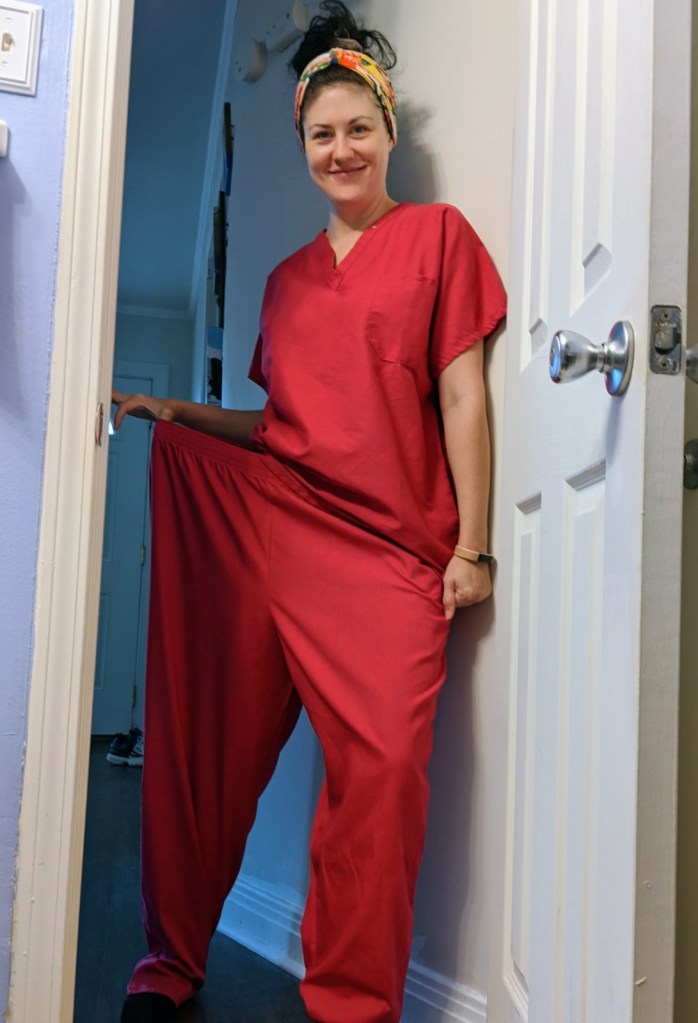
In case I never mentioned this before, I am a teacher. I teach Special Ed to about ~120 cool people, some of which happen to be medically fragile. BUT since it’s looking like schools are going to open in the fall, despite the deaths and serious danger it puts us all in, I decided I’m going to try to be as safe as possible.
Aside from masks and gloves, I’ll be wearing these sweet, sweet scrubs. I found them at Salvation Army for $4.99, brand new! There’s only one issue.

They’re huge on me.
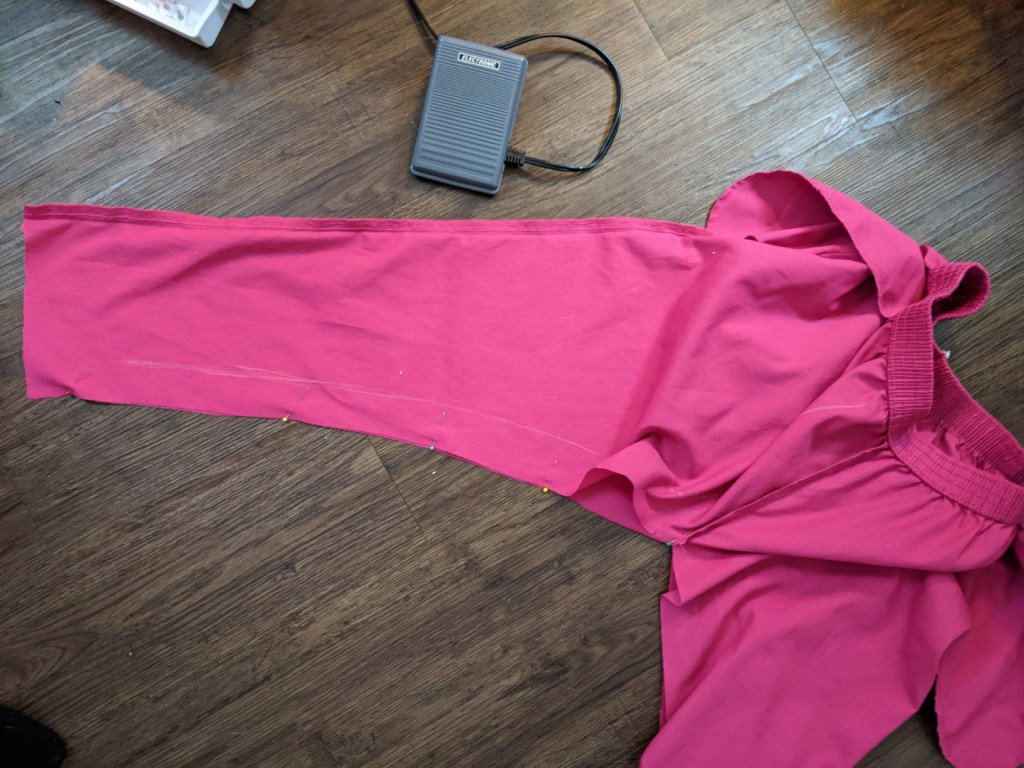
Luckily the bottoms have a stretch waistband, so that’s a simple take in! I started by laying a pair of my favorite leggings over them. I am 5’8″ tall and average build, so you can kind of imagine how swamped I’d be in these pants as is…
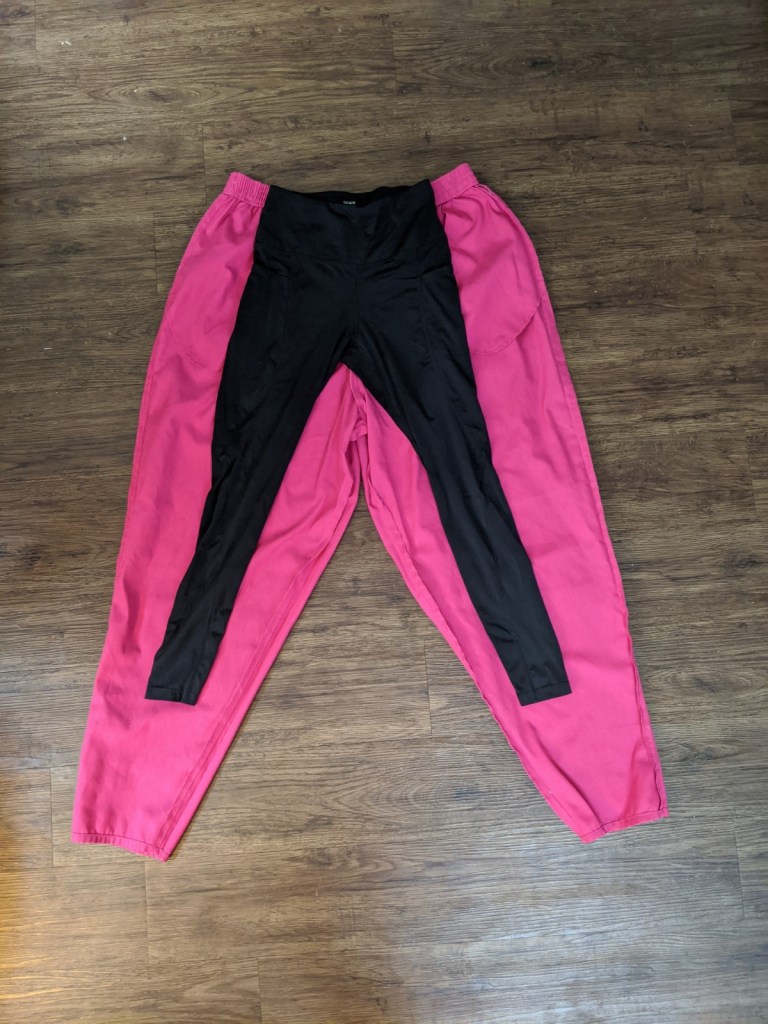
These scrubs have inset pockets on the side seams, which I didn’t want to lose, so much of the taking in process will be done at the crotch! Yes, you DO NOT have to lose the pockets on scrubs, pajama pants, workout shorts, etc. if you take in from the crotch seam.
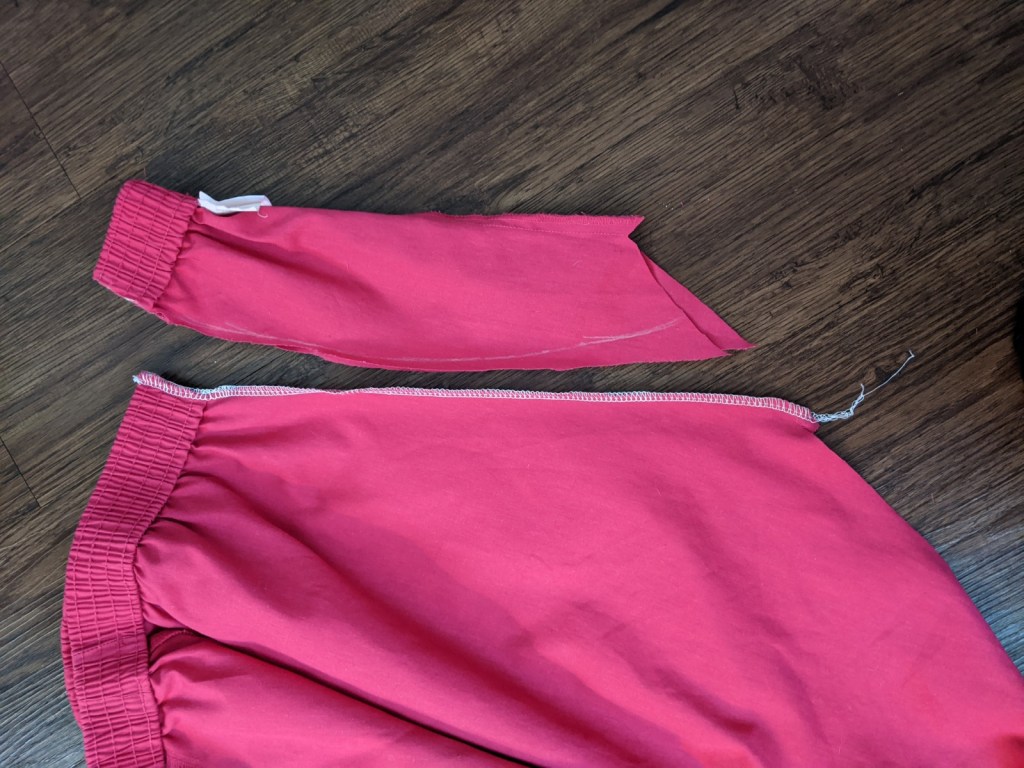
Basically, what you do is determine how much gap there is between the garment and your body, and split that between the front crotch seam and back crotch seam. Then, draw a curved line from the waistband to the end of the crotch seam. Here’s a hastily drawn diagram of what I mean:
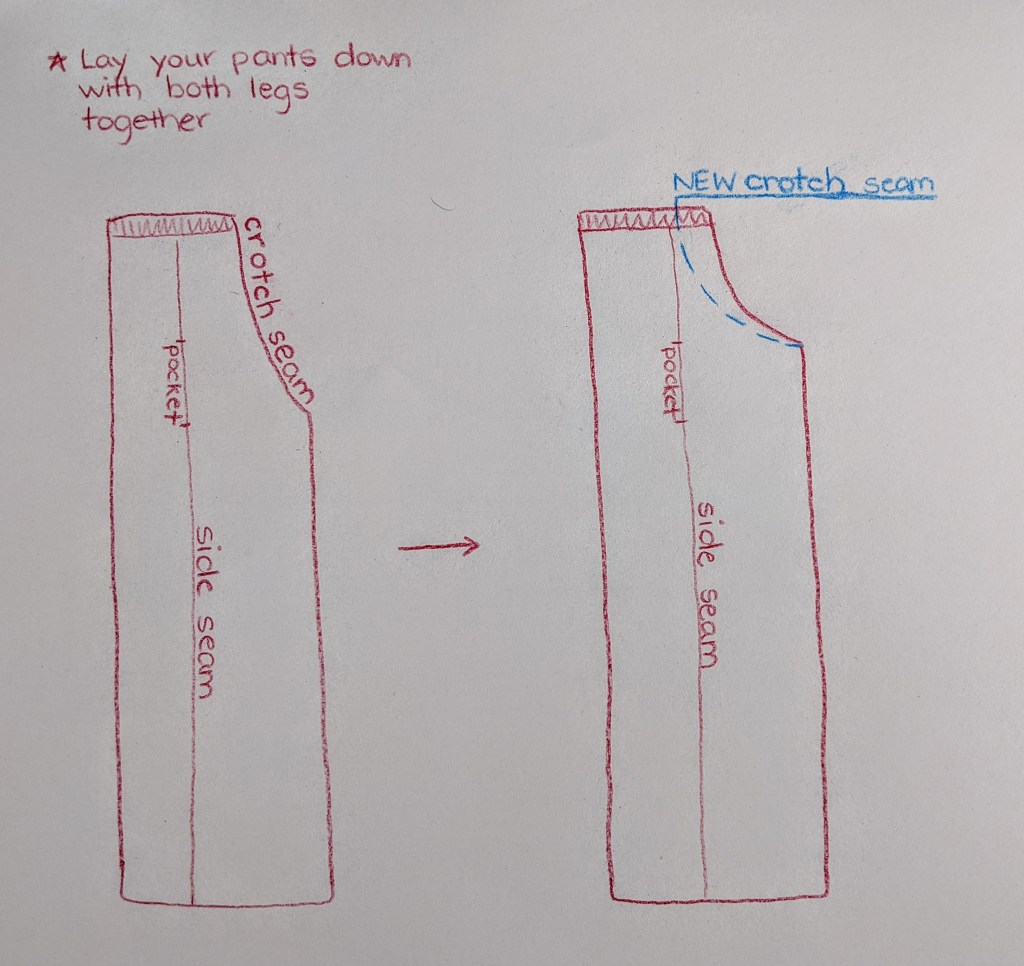
I found out along the way that you’ll have to take the seam in on the front and back, because when I tried to take in the legs, the seams didn’t match!!! No worries, just repeat the diagram instructions above and the legs will magically match again 🙂
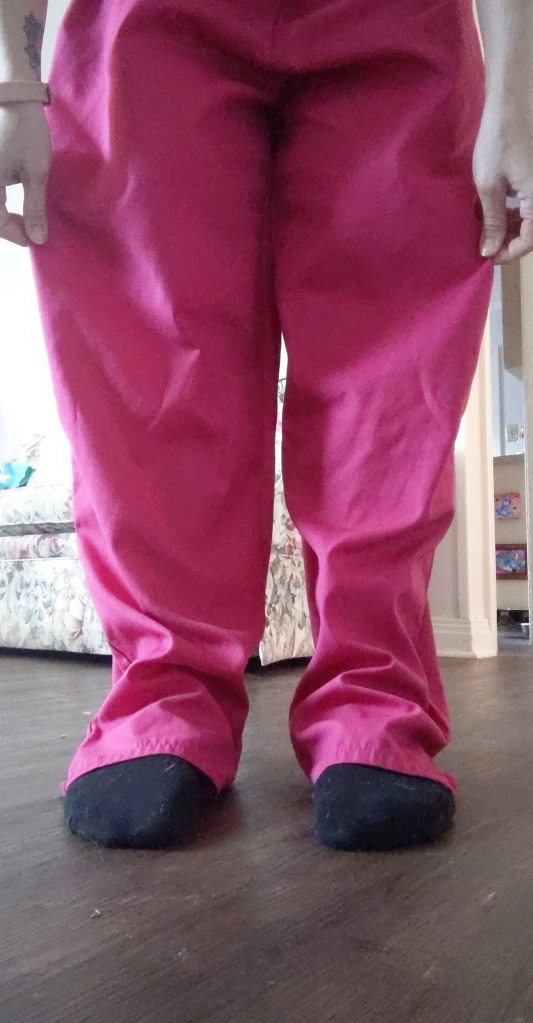
Once I took the legs in, the length needed to be addressed. Once again, I’m pretty tall for a lady, and this length was a bit extra.
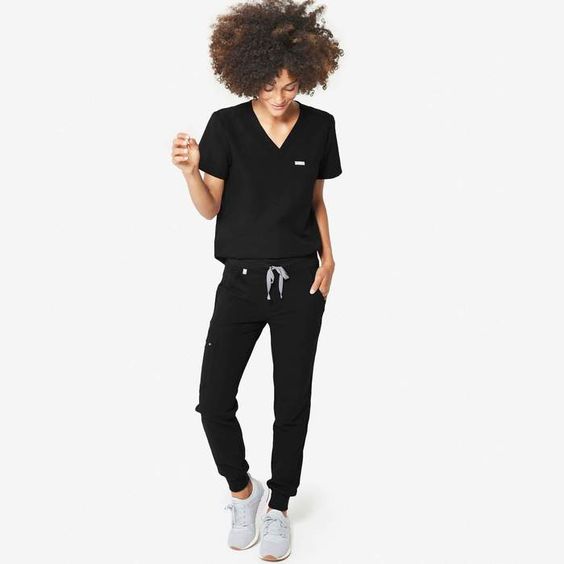
While looking at Pinterest, I saw some cute scrub pants that I thought I could recreate. They kind of have the jogger style bottom rather than straight leg, so imma copy that.
I took a piece of elastic and wrapped it around my leg to figure out how big a piece I needed to give it that sinched look. I left about 2″ extra for seam allowance so that I could sew the elastic together and not have it cut off my circulation.

Next, I made a casing at both hems so that I could run the elastic through it. To make a casing, sew the hem seam, and leave about 1 – 1 1/2 open. Then attach a safety pin to one end of the elastic and kind of work the elastic through the tunnel. When it pops out on the other side, sew both ends together in a zig-zag stitch. Zig-zags preserve the elasticity, and are less likely to break than a straight stitch when stretched!
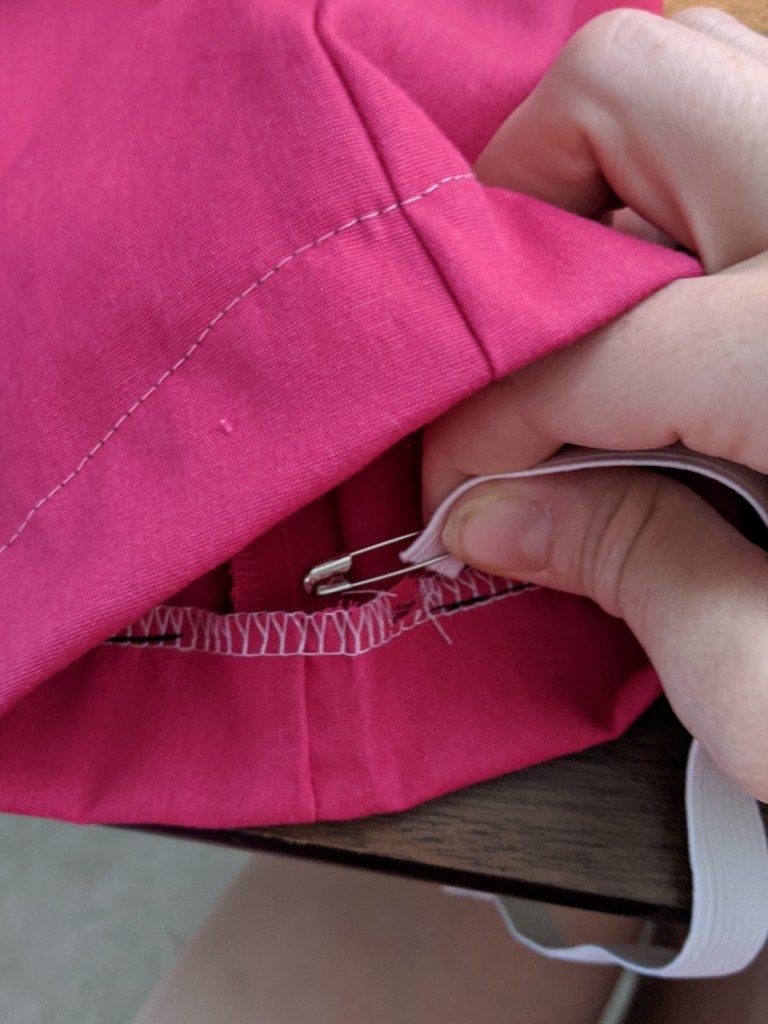
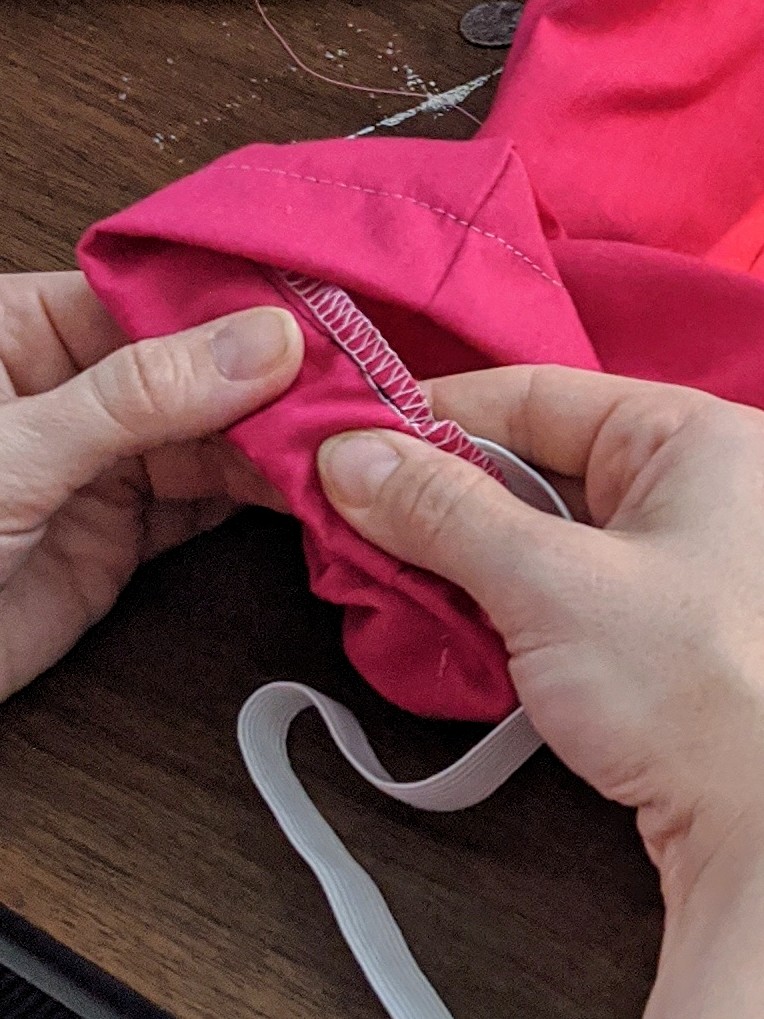
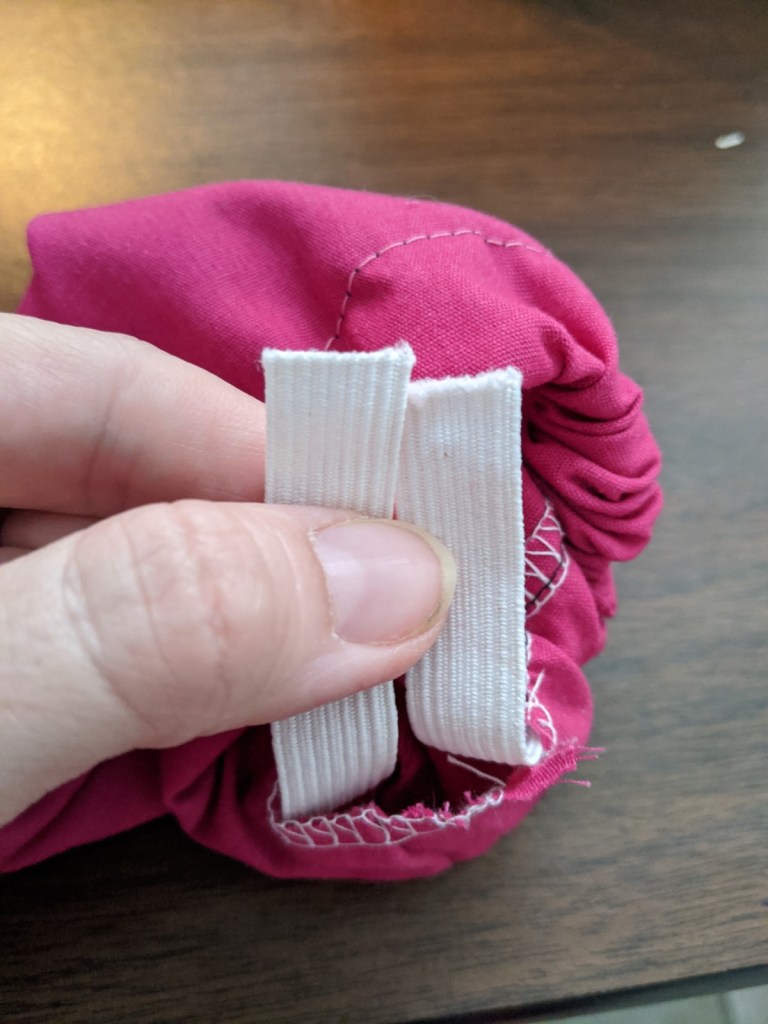

Lastly, you close up the hem and you’re good to go!
The next thing to tackle was the top. It wasn’t totally terrible, but it could stand to be a little more fitted. Also, since it was so big, the breast pocket was literally in my armpit, which simply would not do.
But first things first!
I pinched the shirt on both sides and marked where I would be comfortable taking it in. Since this has to be pulled over my head to wear, I can’t make it too fitted, or I won’t be able to get in. Er go, I left a lot of breathing room.

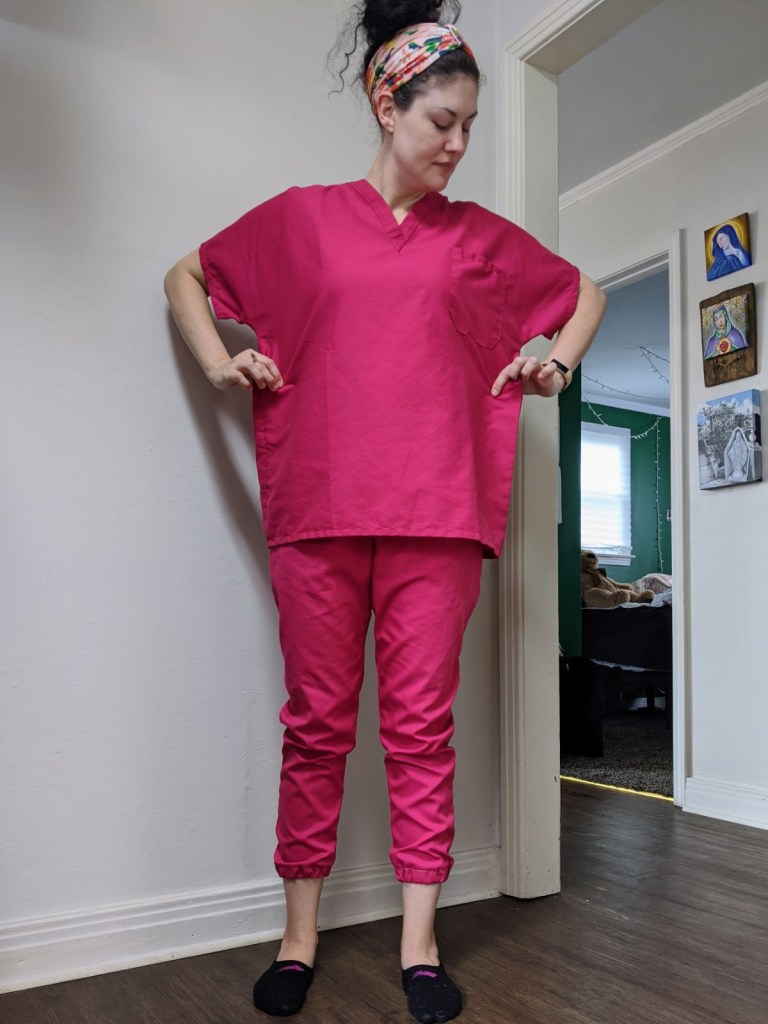
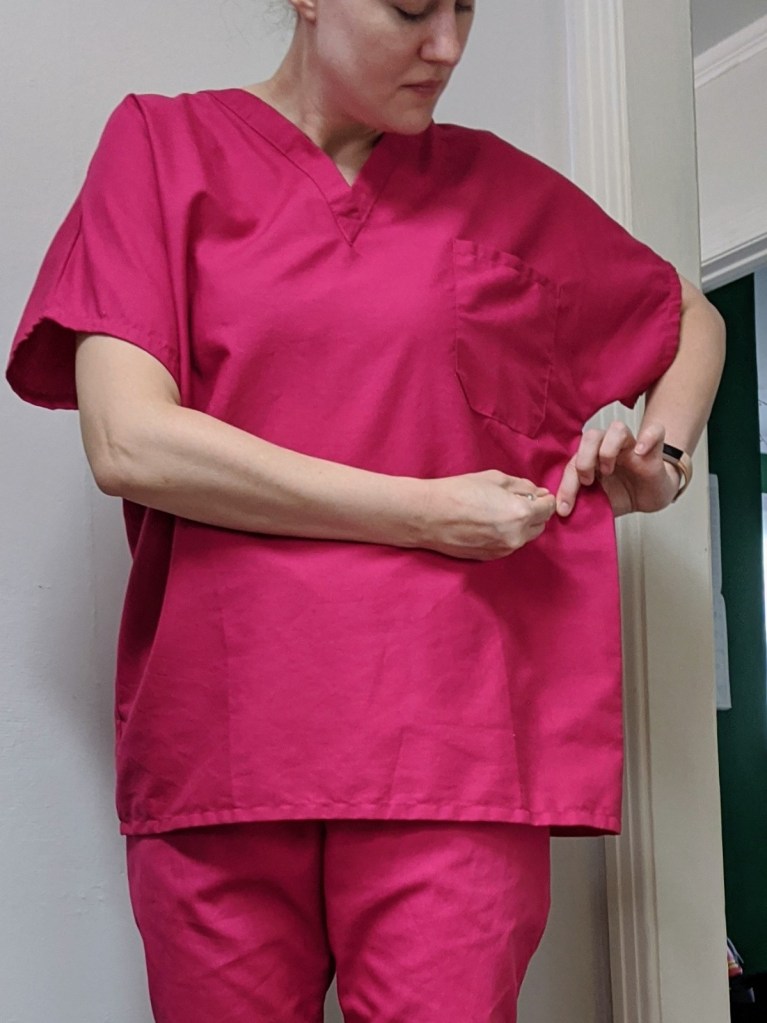
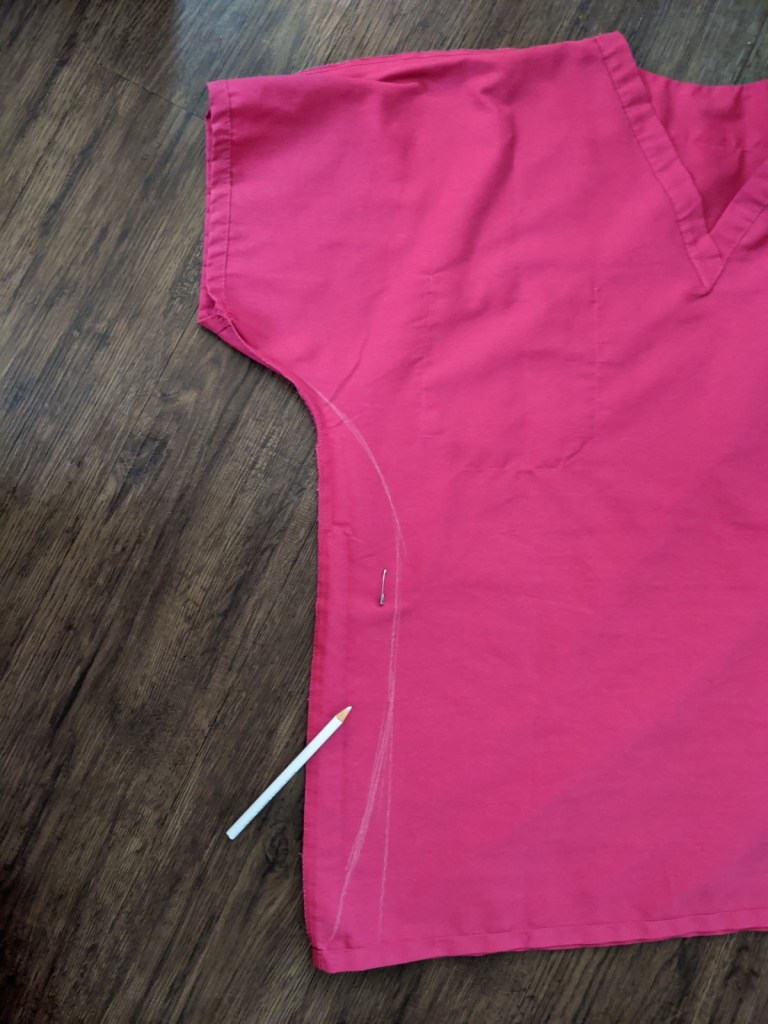
I then ran it through the serger on both sides, so now she’s more shapely. The LAST LAST thing was to move that pit pocket, which is what I did.
First, I undid all of the seams with my embroidery scissors. I’ve said it before, but it bears repeating: seam rippers pull on the threads, embroidery scissors do not. If your fabric is delicate or loosely woven, using a seam ripper will damage it. This is why I always use embroidery scissors instead. Go slooooooooow and your patience will be rewarded. This advice goes for most things in life.
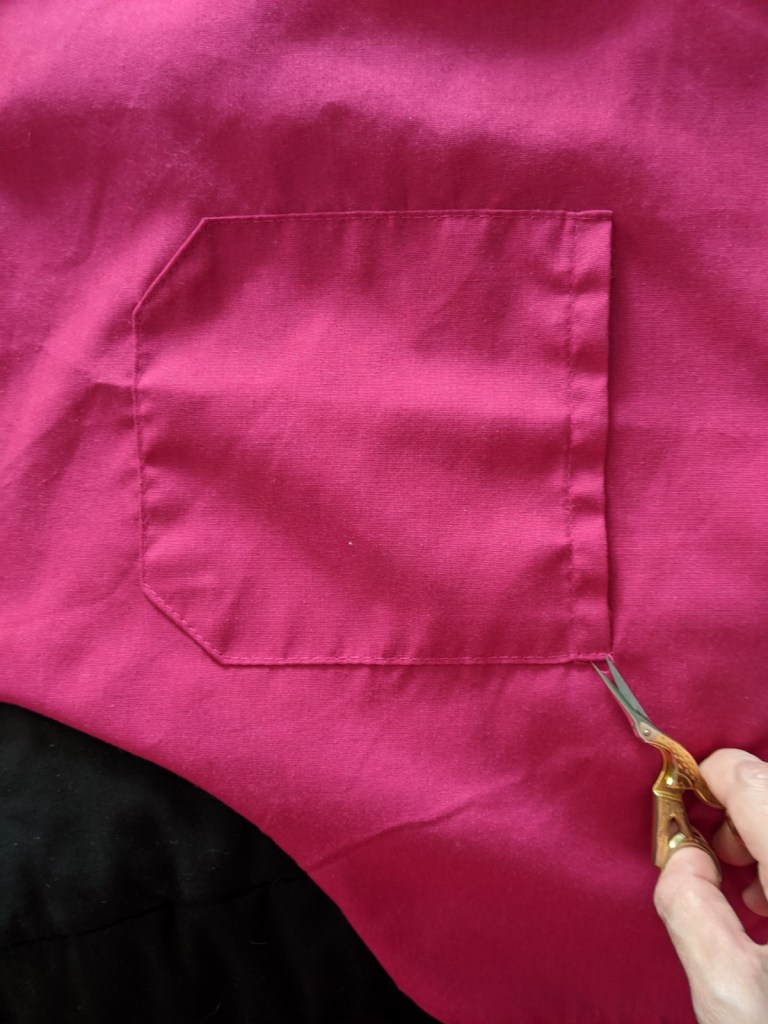
Then I moved the pocket to the bottom hem and pinned it down.
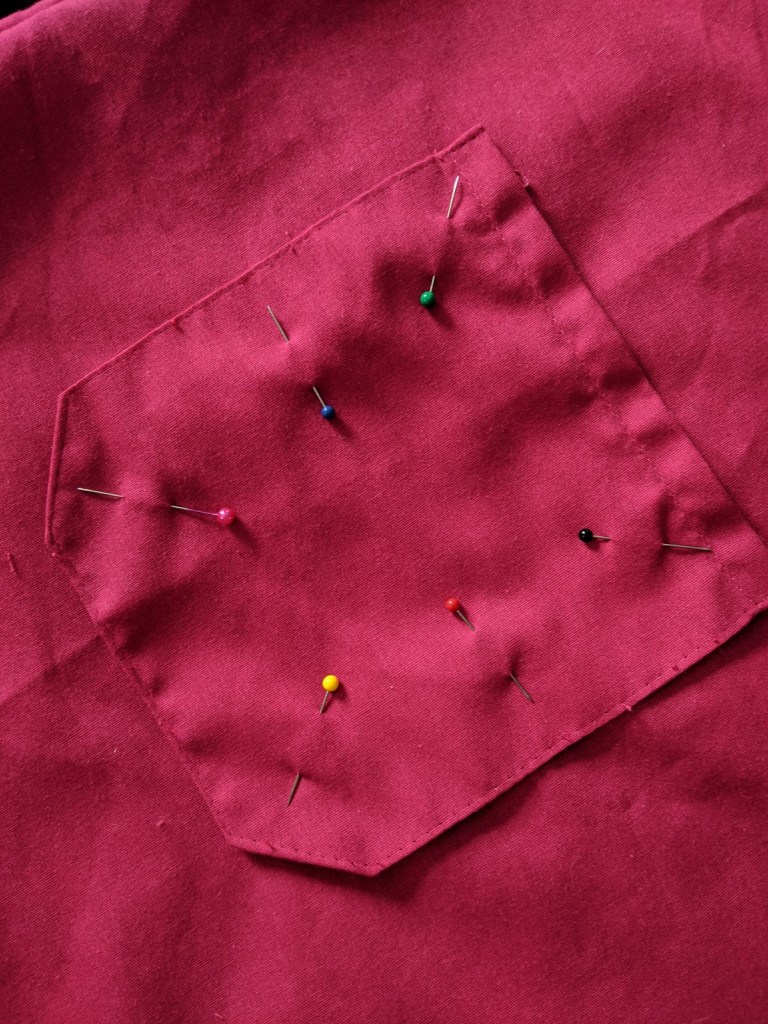
And THAT, dear reader, was it. Ready for my fashion show?
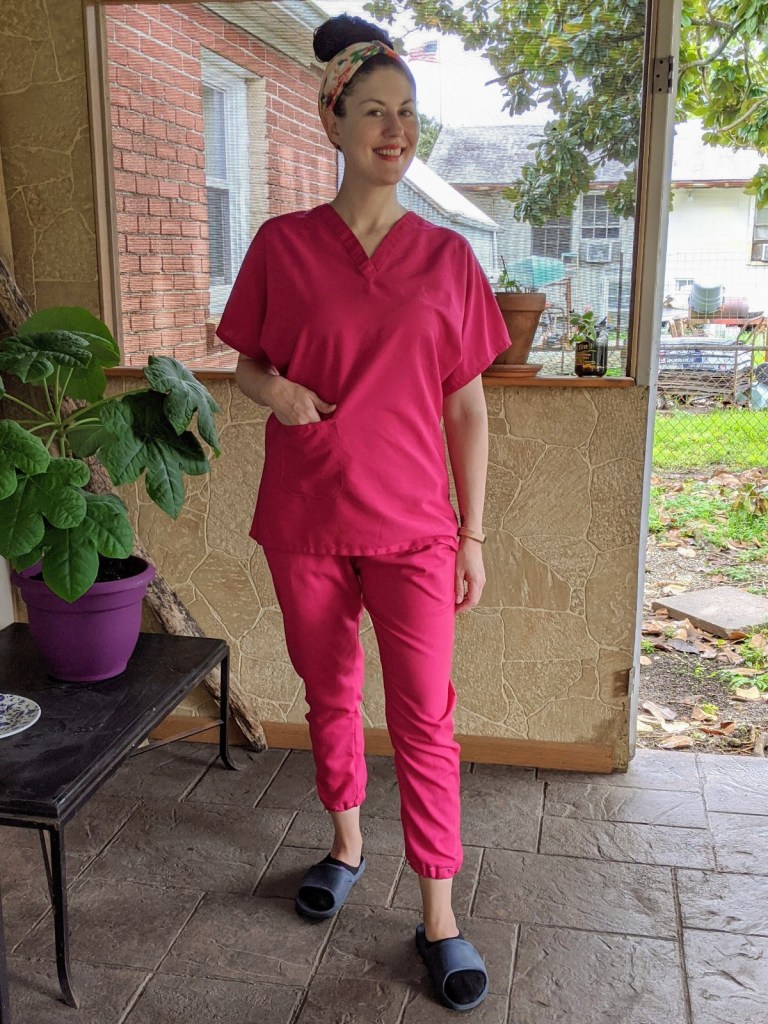


These upcycle was more function than fashion, but if I have to go back to in-person teaching over 120 special needs kids, I want to make sure I keep us all as safe as possible. After all, the government won’t.
***Some of my teacher friends wondered why I would be wearing scrubs, and I sent them this quote from the “scrubs” entry on Wikipedia:
“Scrubs are the sanitary clothing worn by surgeons, nurses, physicians and other workers involved in patient care in hospitals. … Scrubs are designed to be simple (with minimal places for contaminants to hide), easy to launder, and cheap to replace if damaged or stained irreparably.”
So that’s it! What do you think about scrubs in schools? Or the pandemic? Or 2020 in general? Let me know!
Until next time 🙂
 Moonflower DIY