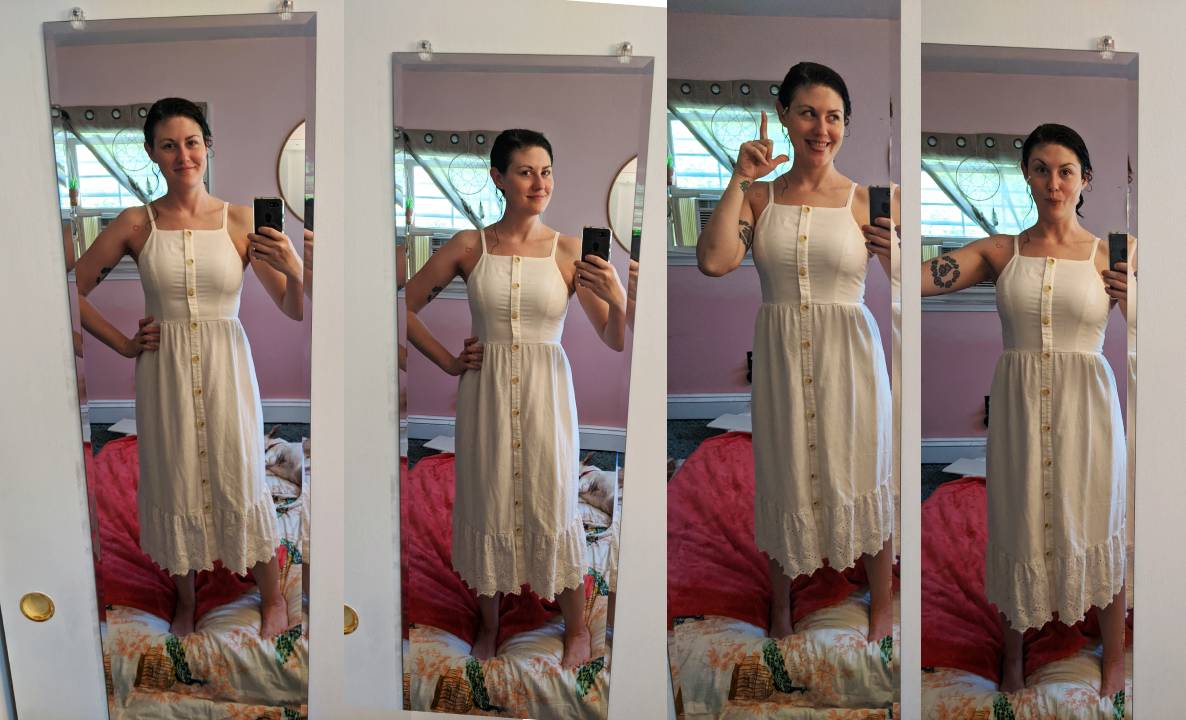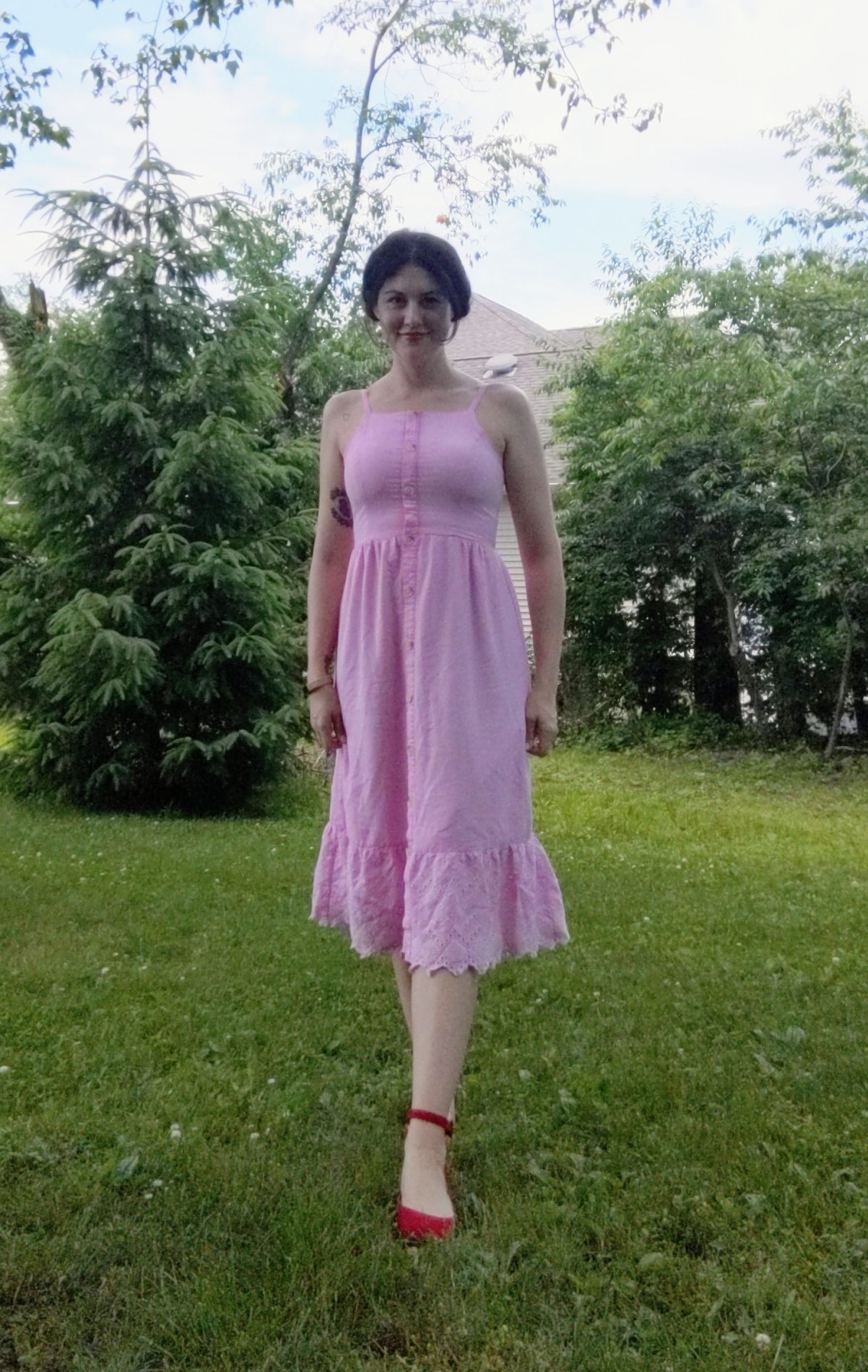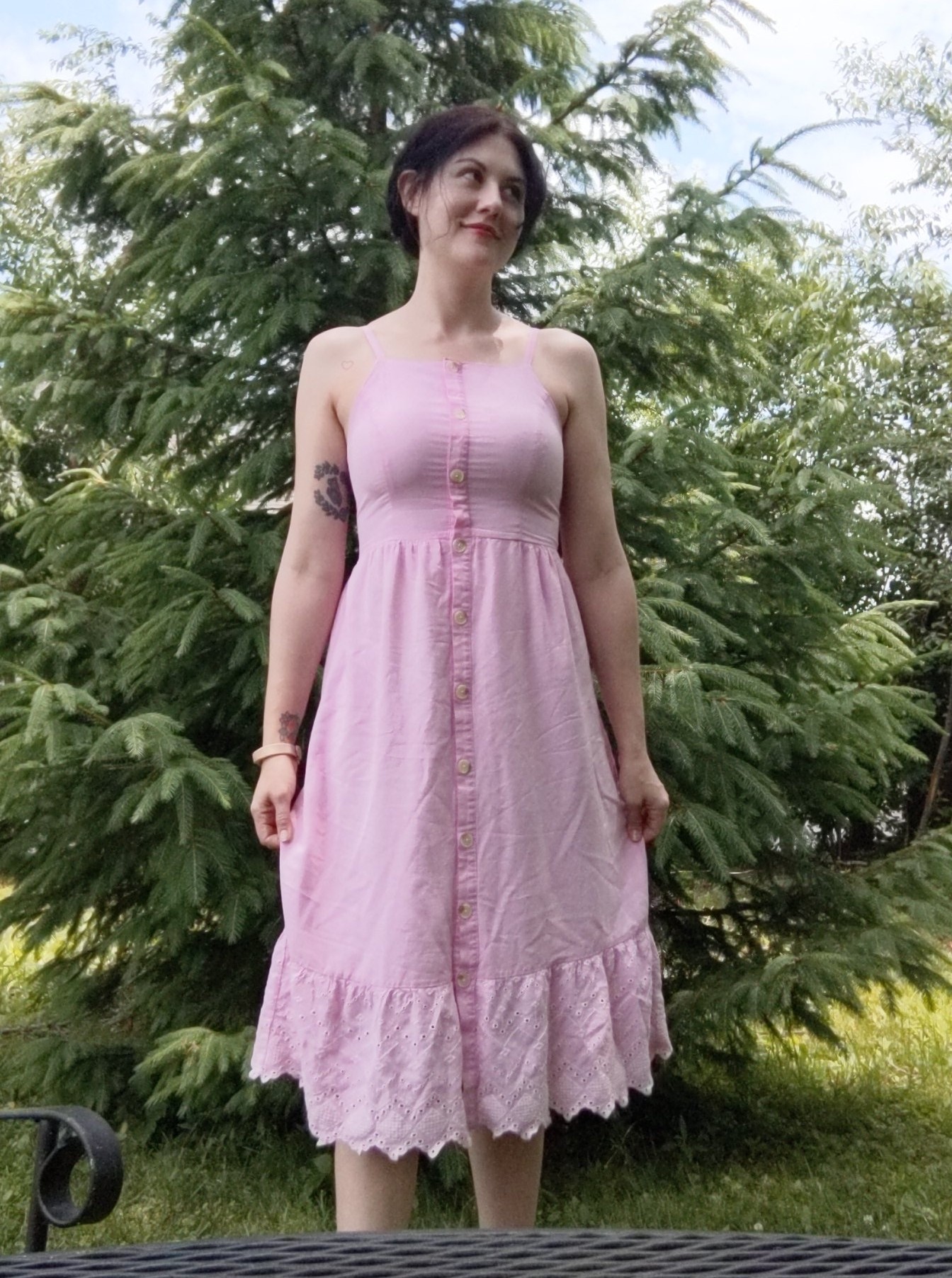
This dress remix starts with a perfectly fine dress. And that’s it. It’s just fine. Not great.
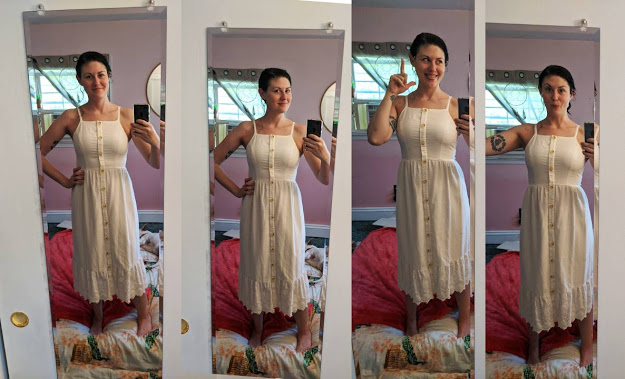
That’s a lot of Madeleines
I’ve said it before that white washes me out, so what better way to update this dress than to change up the color? You can see behind me in the pictures that my bedroom is a gradient of pinks, even though I am a grown lady-woman. It’s because pink is the color of joy and laughter! We have phrases like, “tickled pink” and “rosey-colored glasses” for a reason, and I just feel good in a pink setting.

My little sister found this dress at one of the Salvation Army’s in New Orleans, but it is originally from Old Navy. 🚨SOAPBOX ALERT🚨 Now I know that Old Navy, and it’s parent company GAP, is a part of the “fast-fashion” problem, but we didn’t buy this garment off the rack and are salvaging it from the landfills, so I’m okay with owning it. Fast Fashion, if you don’t know, is the cheapening of clothing construction by using shoddy fabrics, rushed production, and harmful dyes and chemicals so that it can reach stores quicker. The result is that the turn around time for inventory is so quick that a store will likely have an entirely new inventory within a matter of weeks. The problem with that is that the clothes fall apart fast, which means the businesses have planned obsolescence so that we the consumers will buy and replace our clothes more quickly, leading to more discarded clothing in landfills. And it’s destroying the planet. Capitalism, am I right? Anyway, you can read more about Fast Fashion here: https://www.nytimes.com/2019/09/03/books/review/how-fast-fashion-is-destroying-the-planet.html
And you can read more about Old Navy here: https://stylewise-blog.com/is-old-navy-ethical/#:~:text=Countries%20of%20production%20include%20Bangladesh,countries%20in%20which%20GAP%20Inc. 🚨 K, all done! 🚨
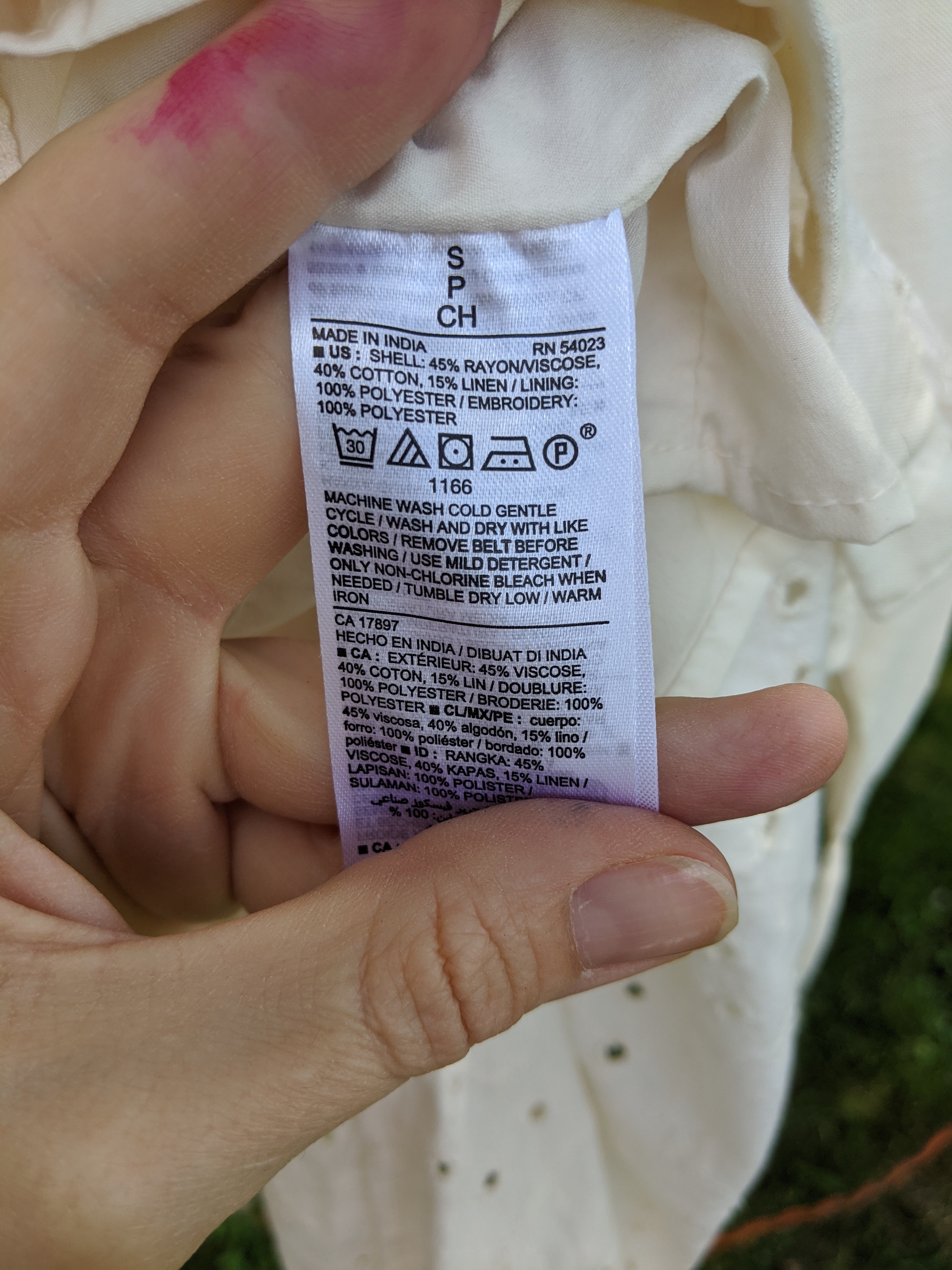
You can see from the tag that the dress is a mélange of materials. In general, natural fibers will absorb dye while synthetic ones won’t. We know cotton and linen are natural, and polyester is synthetic, but what about rayon? Rayon is a funny material, and to quote an article from the Museum Textile Service’s website:
“The name “rayon” was coined in the 1924 as a generic term for regenerated cellulose fiber. The “Father of Rayon,” Frenchman Count Hillaire de Chardonnet, discovered in the 1880s that nitrocellulose from rags or wood pulp could be turned into fiber, thread, and fabric. Rayon was the first manufactured fiber, but because it is derived from cellulose, is not considered to be a true synthetic but a “semi-synthetic.”
In regular terms, that means that rayon is a bi-product of manufacturing natural fibers. All that is to tell you that YES! YOU CAN DYE IT!
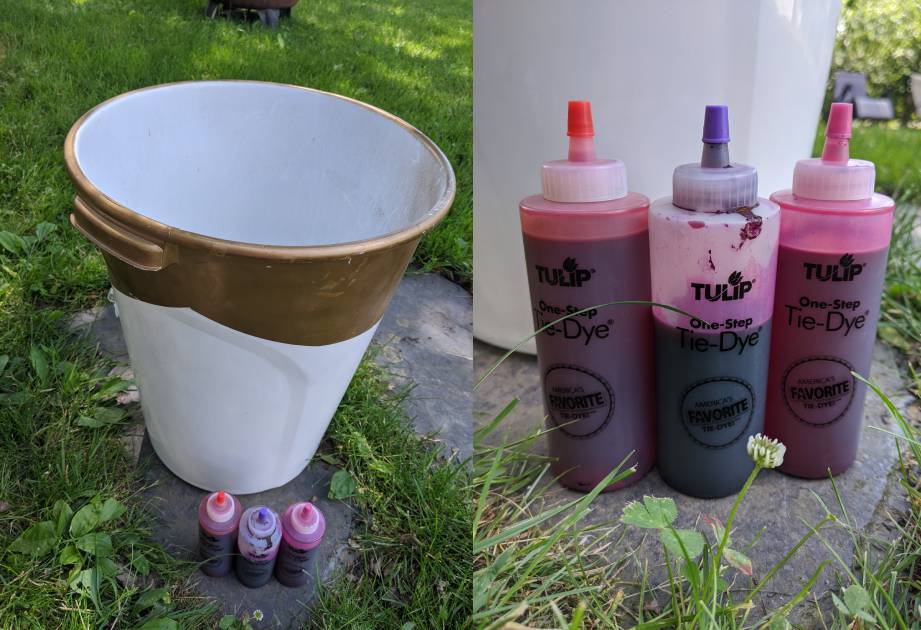
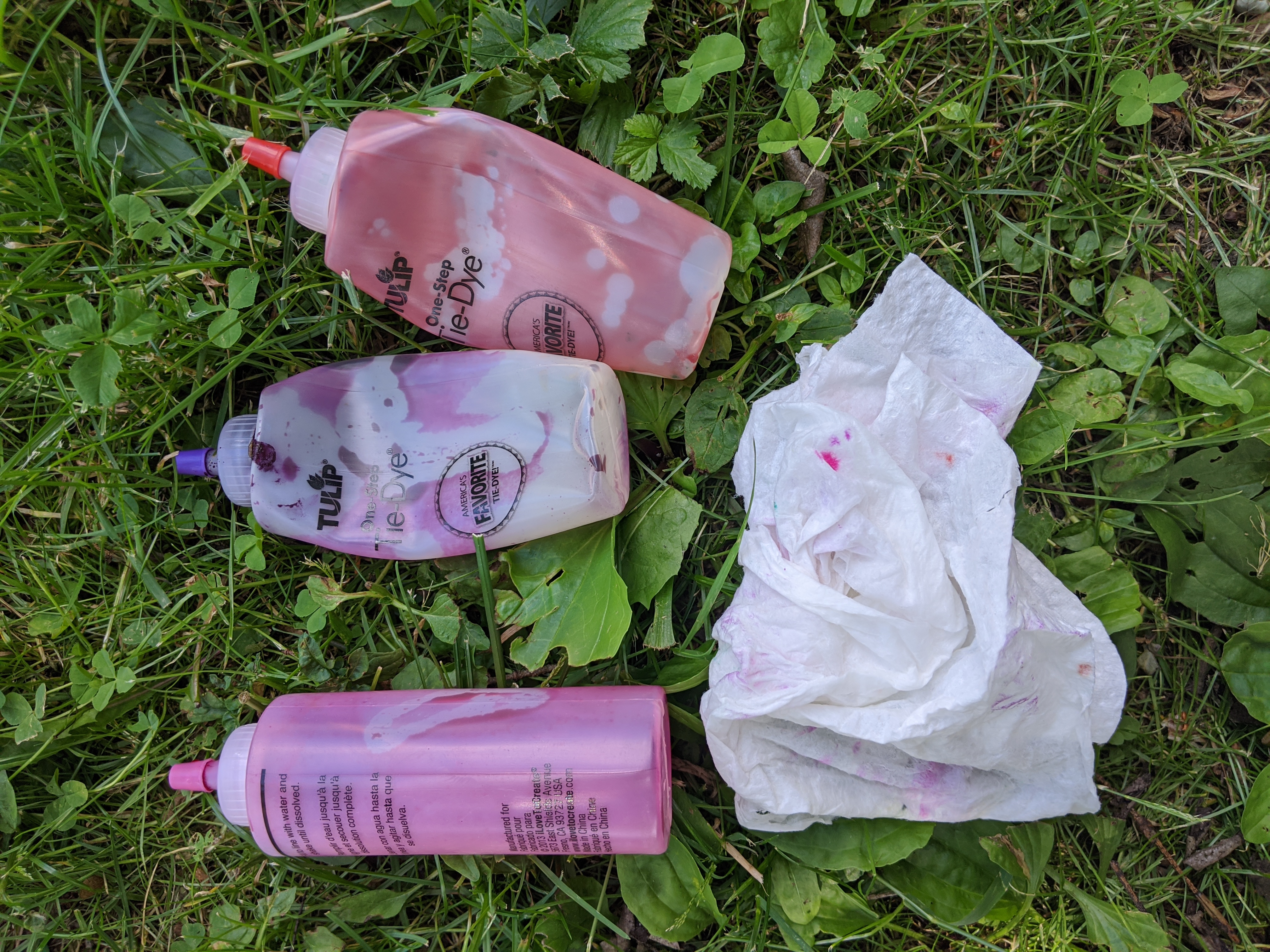
I’ve had this tie-dye colorant for literally a whole year, because I tie-dyed some shirts last summer, but the dye is still surprisingly usable. In the interest of using up the stash, I decided to blend all the rosy toned colors I had and just see what happens!
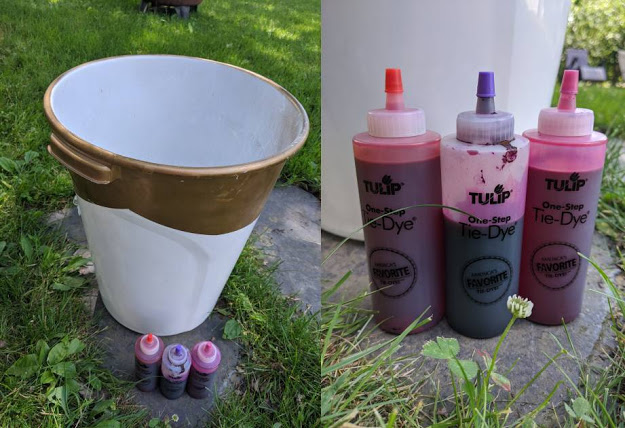
My supplies
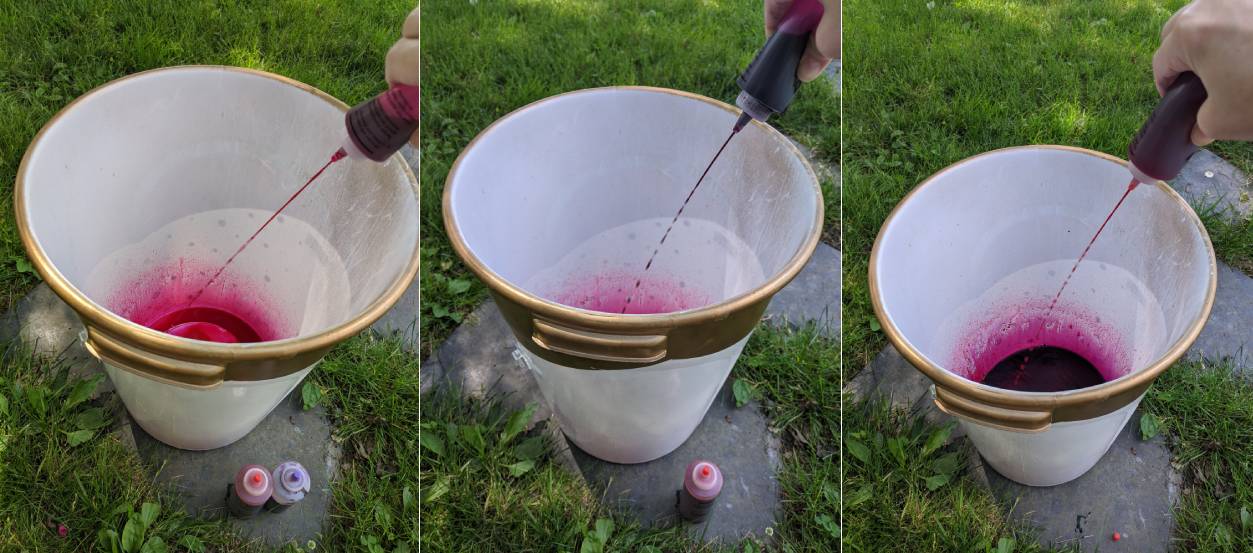
I squirted the pink, red, and purple dyes into my *clean* trash bin.
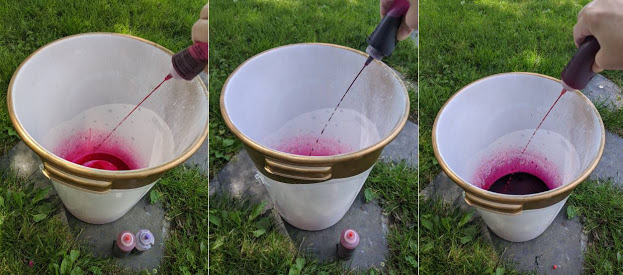
Bloooooooooooooooooop!

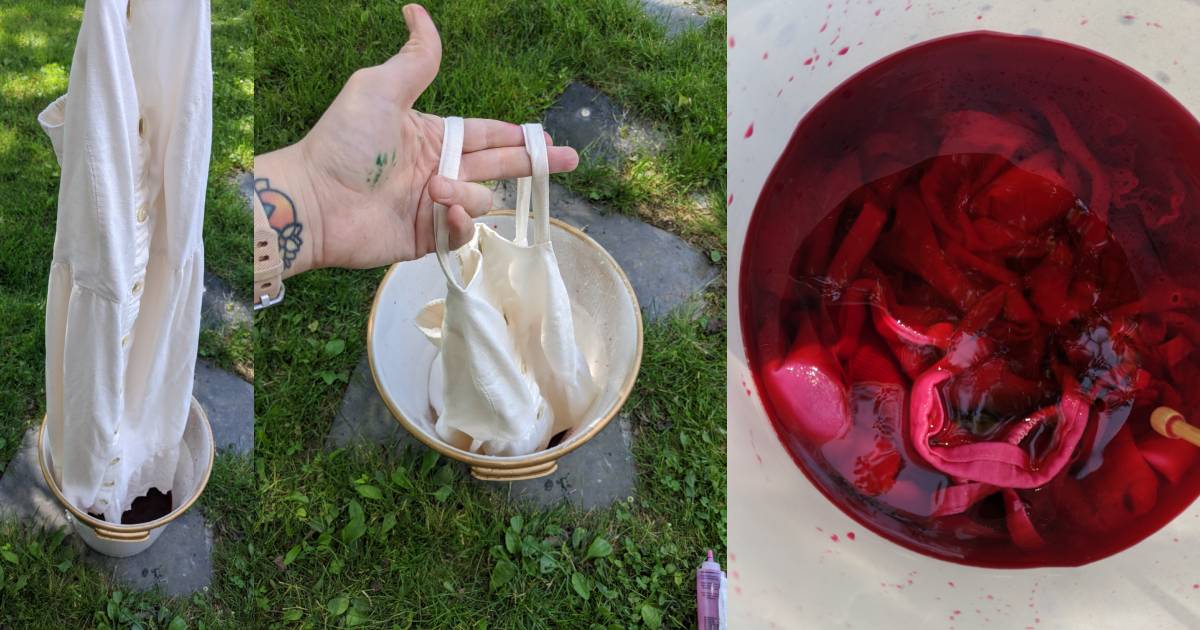
Once it looked deep enough to fully submerge the dress, I sloooowly plopped it in.
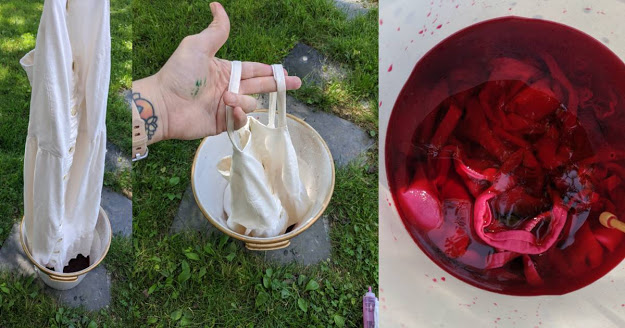
Goodbye plain white!!!
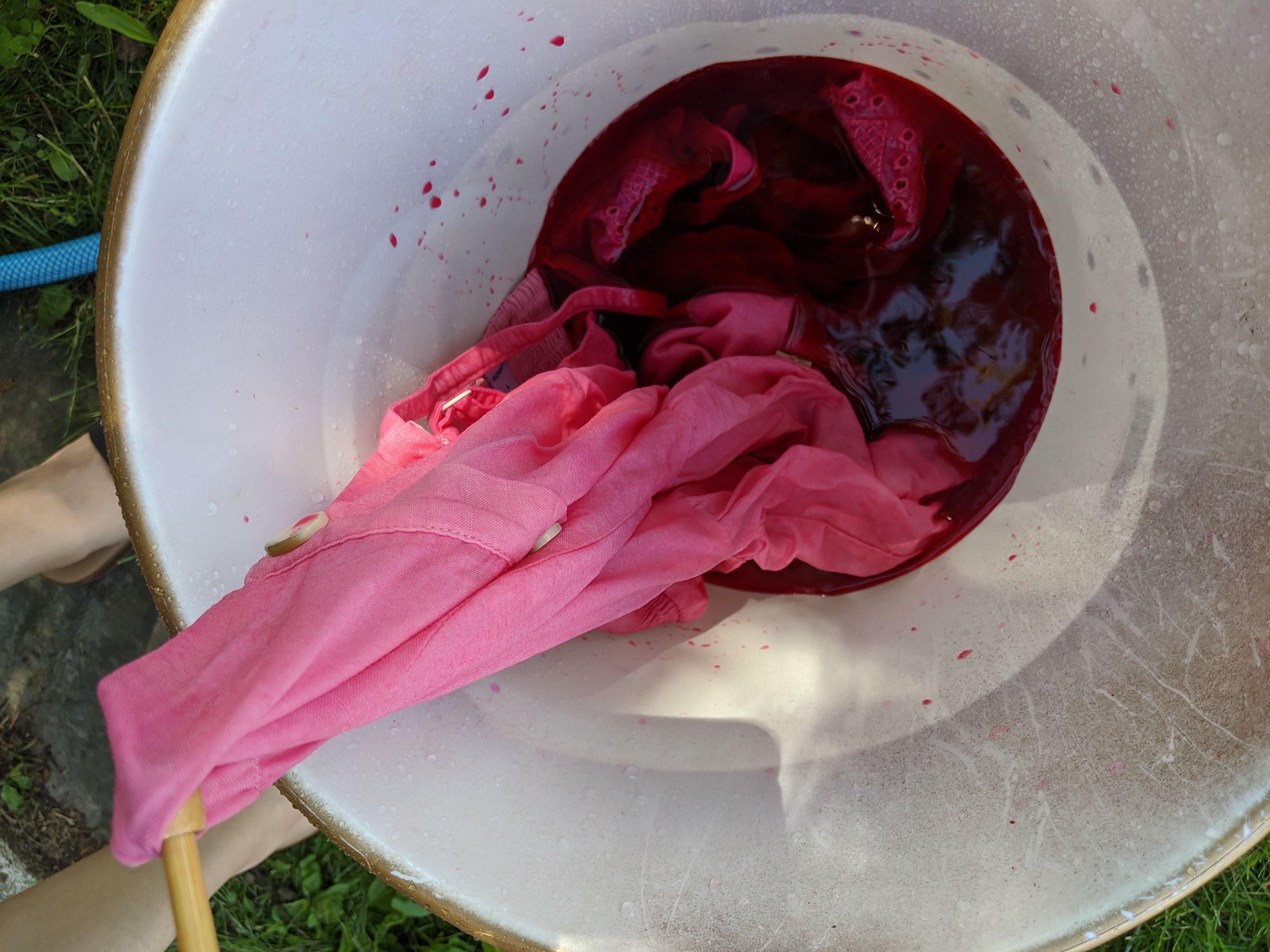
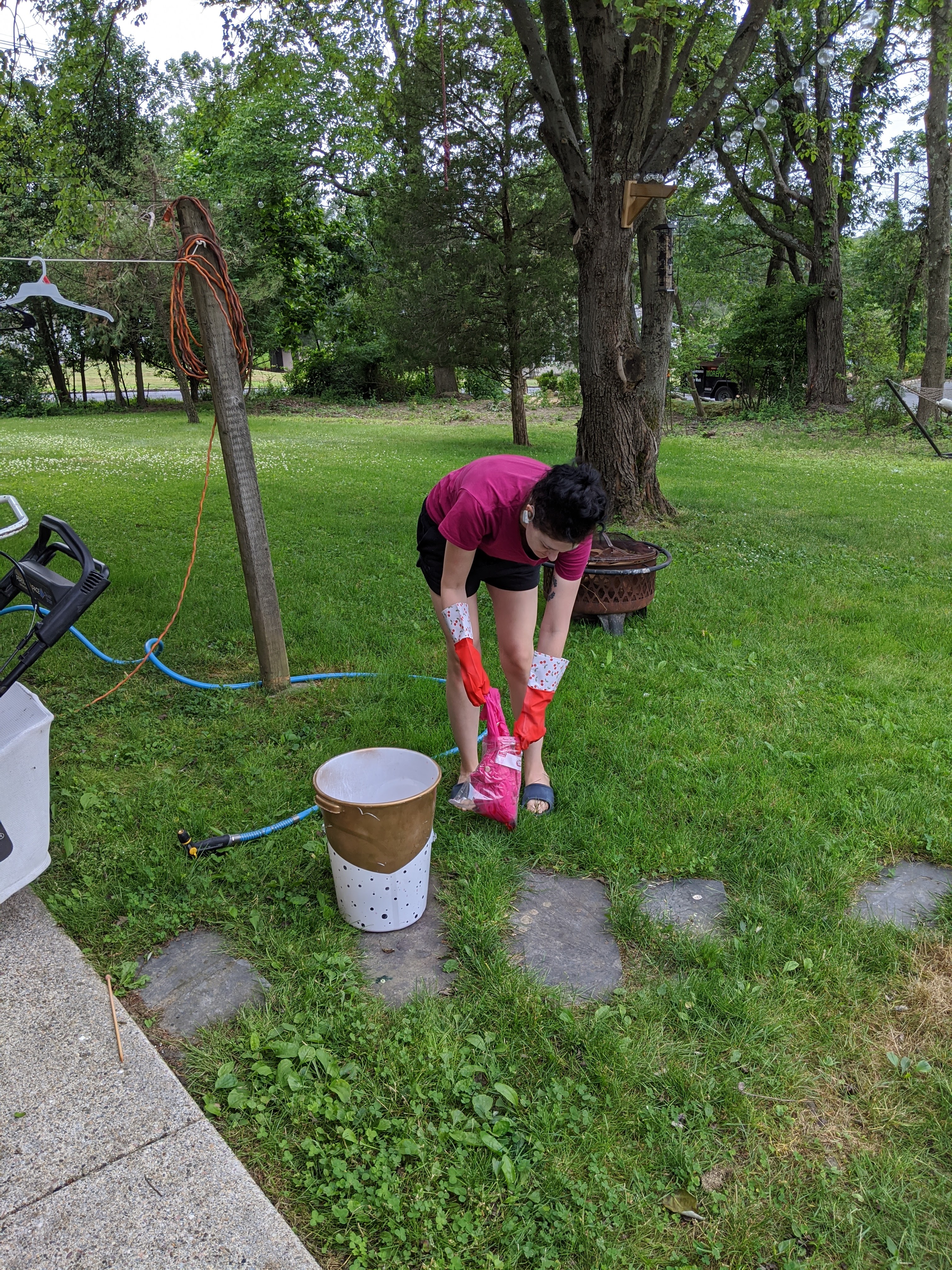
I stirred the dress with one of my knitting needles, because as my sister likes to say (ironically), “country girls make do.” I left the dress in the dye bucket for most of an hour, and then put it in a plastic bag with some of the dye to hang out with overnight.

Looking pretty promising…
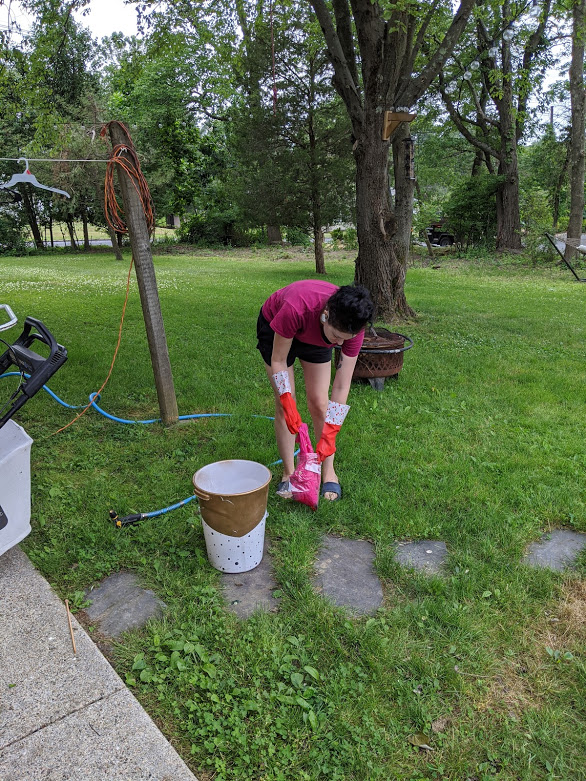
The next day I took the dress out of the bag, and was pleased to see how vibrant the color was. In case you’re thinking, “ew, why is she wearing the same outfit from yesterday?” I will point out that I started dyeing the dress whilst in my pajamas, and was still wearing them when I woke up the next day to rinse the dress. So. There ya go.
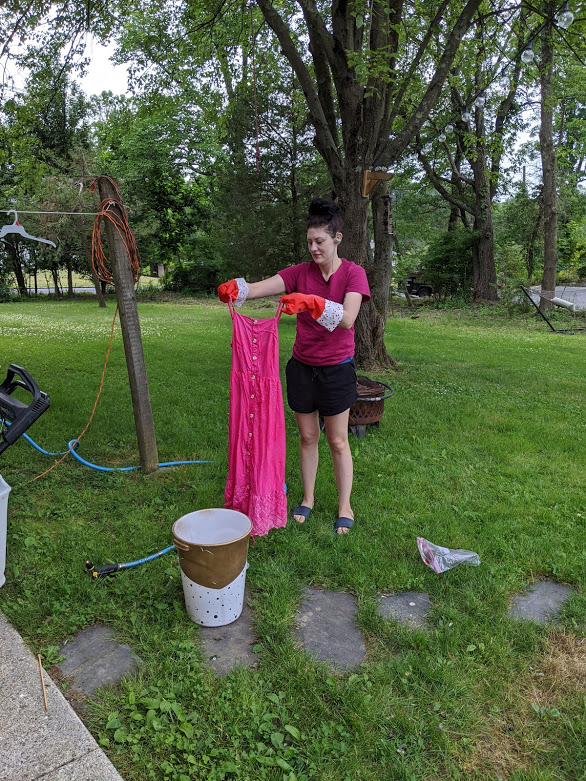
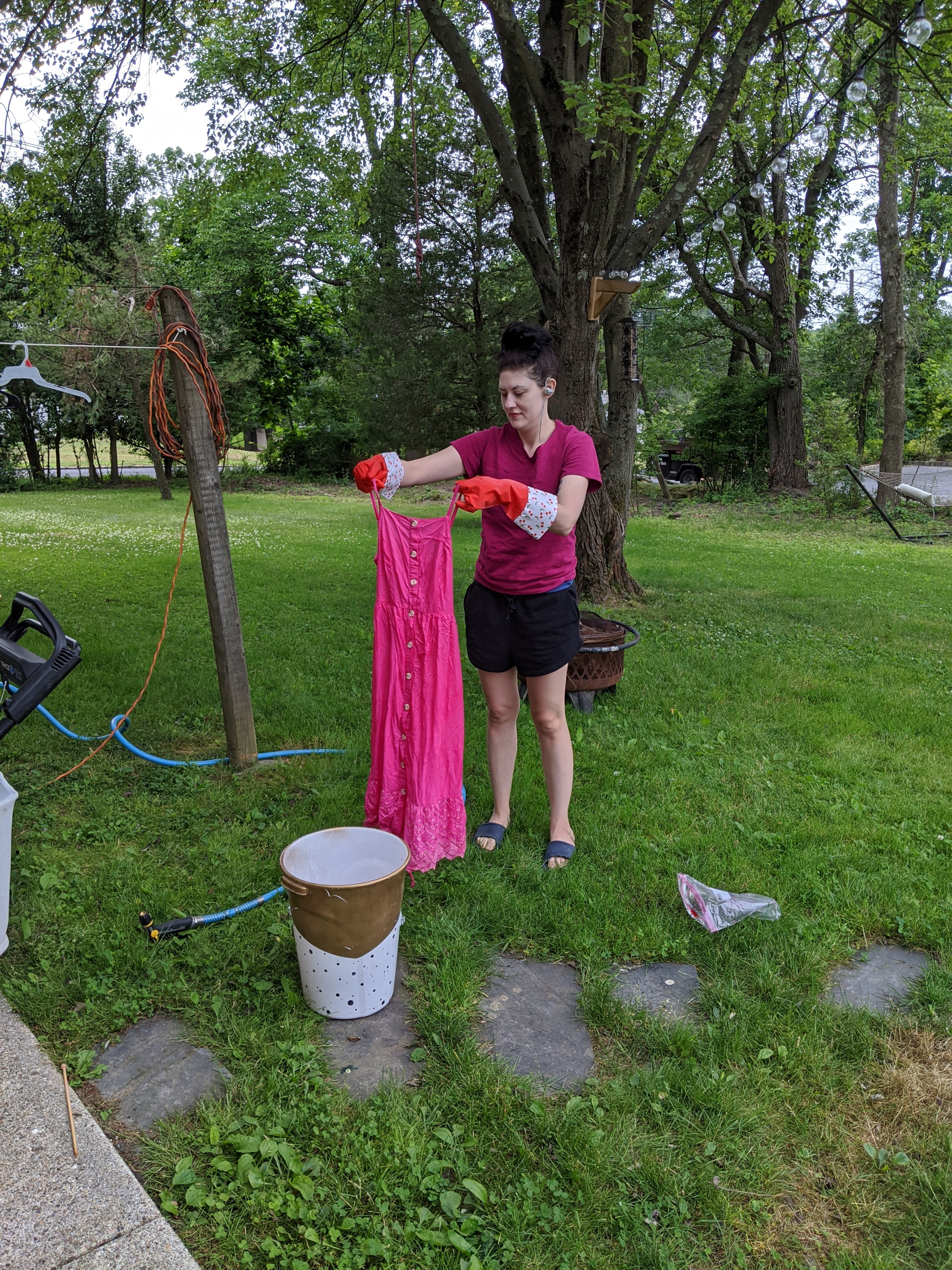
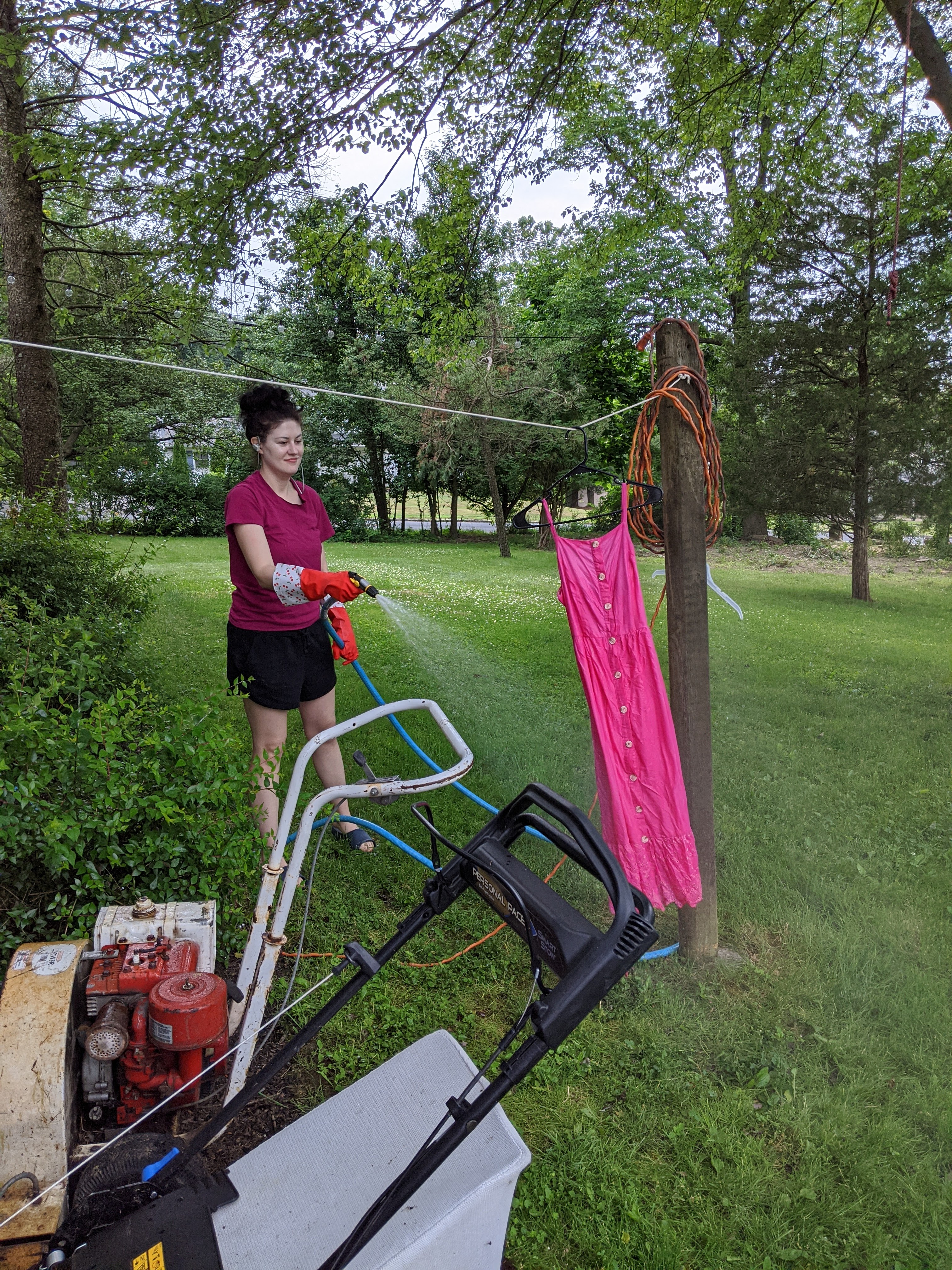
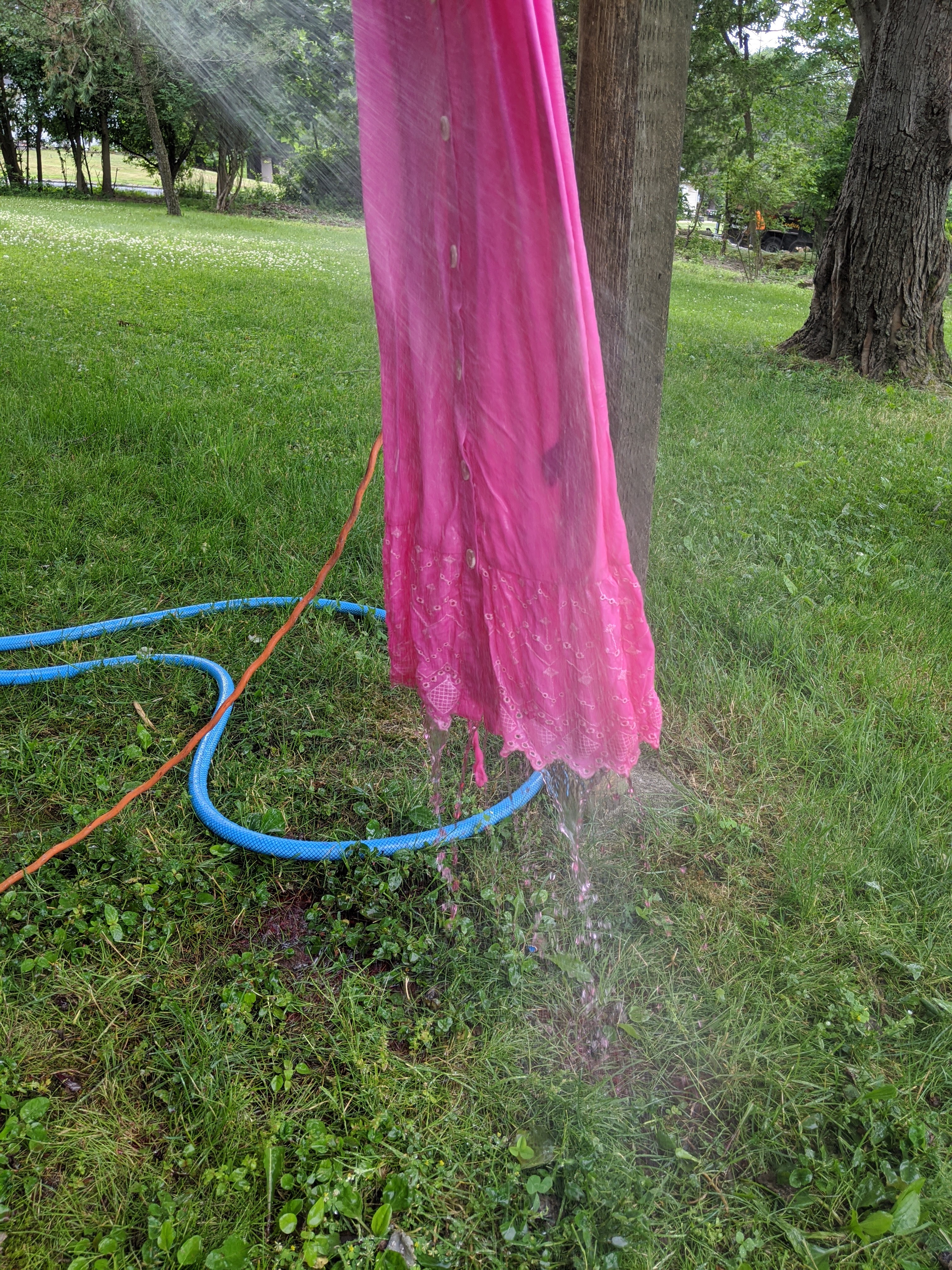
Then, like a hot pig in the sun, I turned the hose on it. You have to rinse your garment until the water runs clear, much like when you color your hair at home.
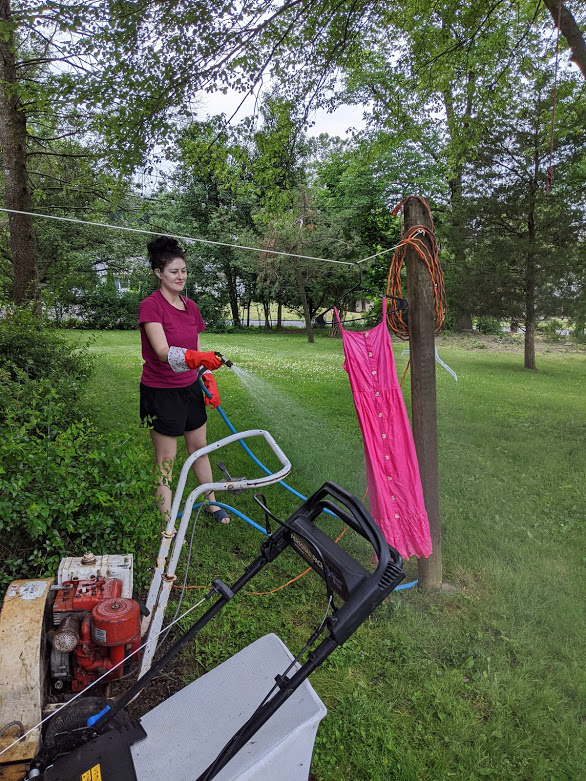
I’ve been told I have Resting Waiting-For-The-Bus Face
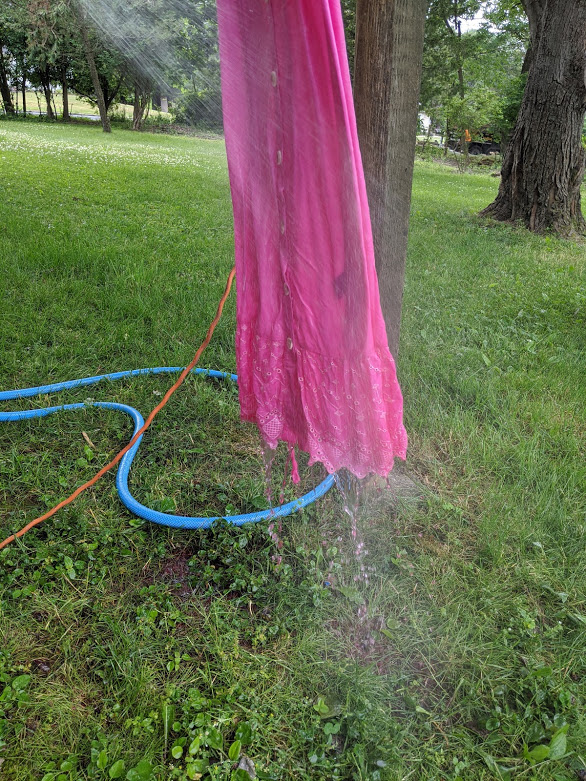
Looks clear to me
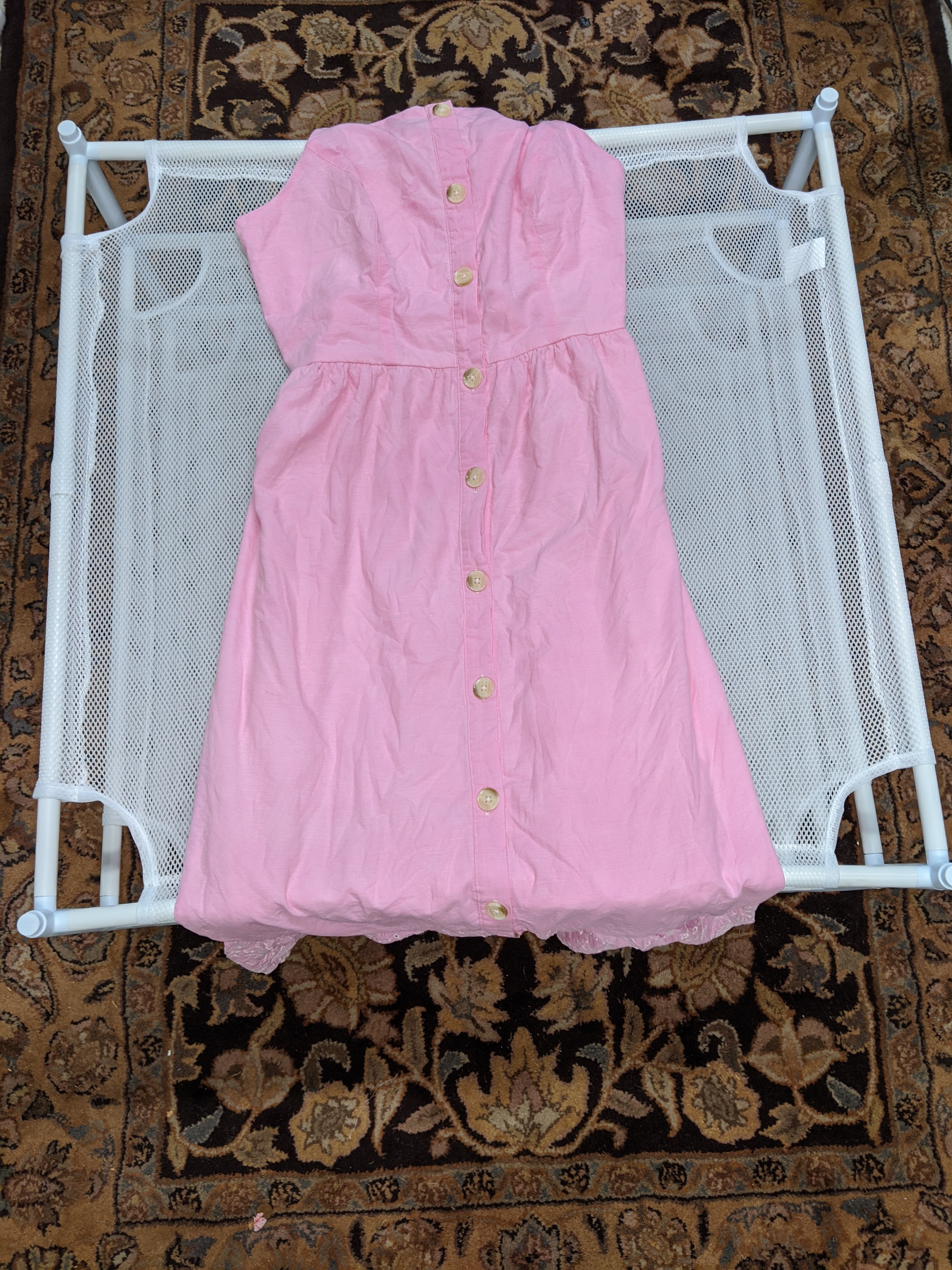
Once the aforementioned water ran clear, I put the dress in my washing machine. That was part of the instructions from the Tulip One Step tie dye kit, but they suggested I add a little detergent. Well– I skipped that part, because I wanted to maintain the color. HOWEVER, when I got it out of the wash, it had lightened considerably.
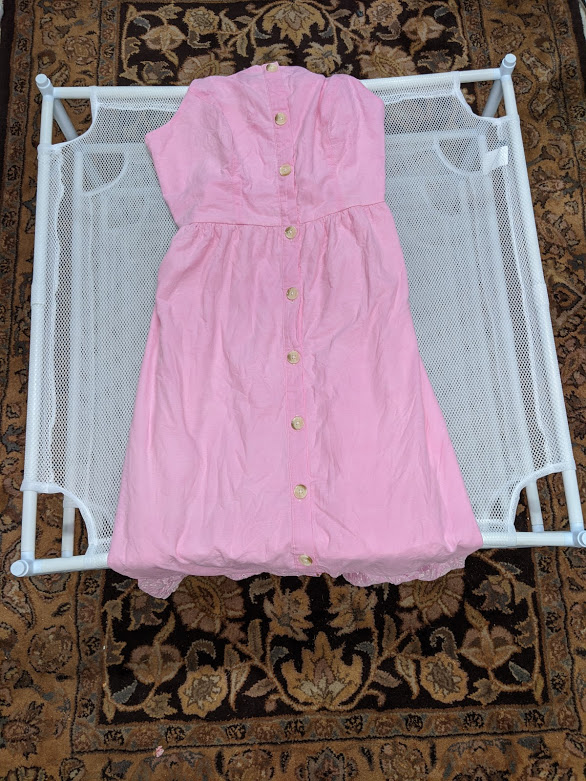
Huh?? Hm 😕
They also said to let it air dry, but… I’m impatient. I let it air dry for about a half hour before deciding to put it in the dryer on a no heat tumble cycle. I assure you, it did not affect the dress at all.
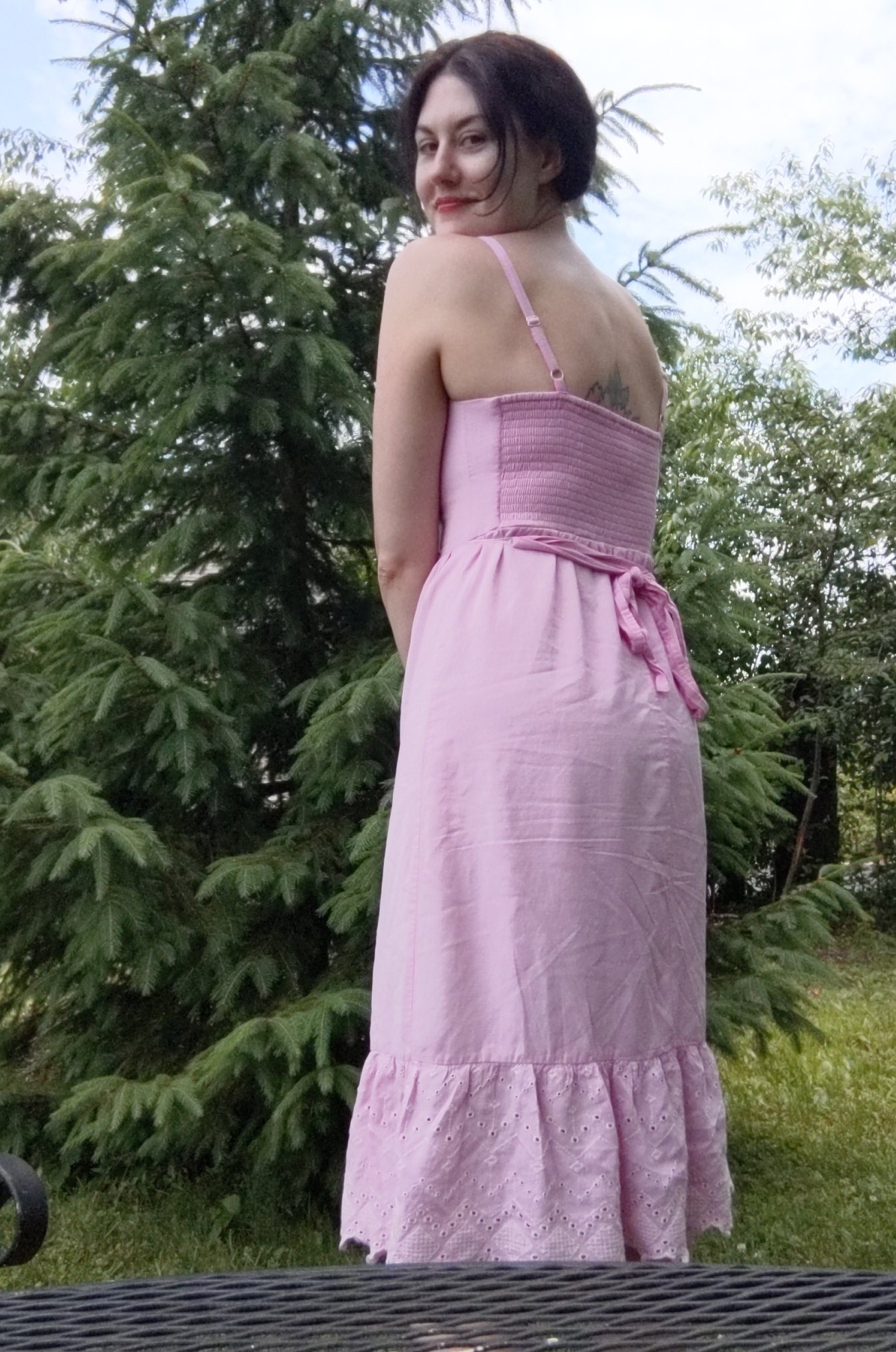
I do kind of wish that the pink had stayed more vibrant, but I am glad the dress isn’t so bland anymore! I did my usual photo-shoot in the backyard. I have to figure out how to get a longer timer for the camera, because so far my phone only gives me 3 seconds from pressing the button to running into place to pose. Hence why the “after” pics often look haphazard!

I’m still killin’ it though 😉
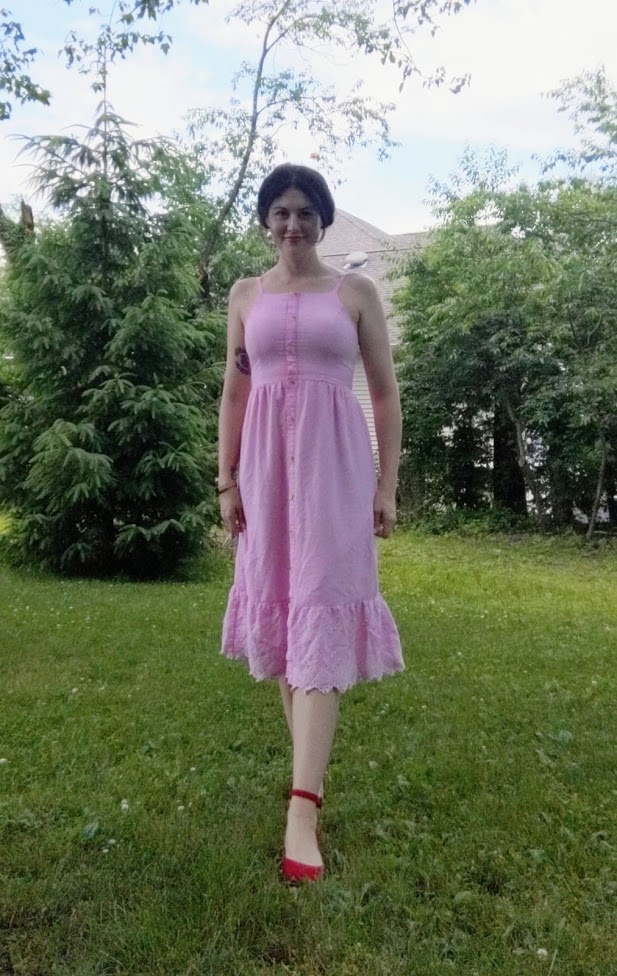
My fanciest shoes
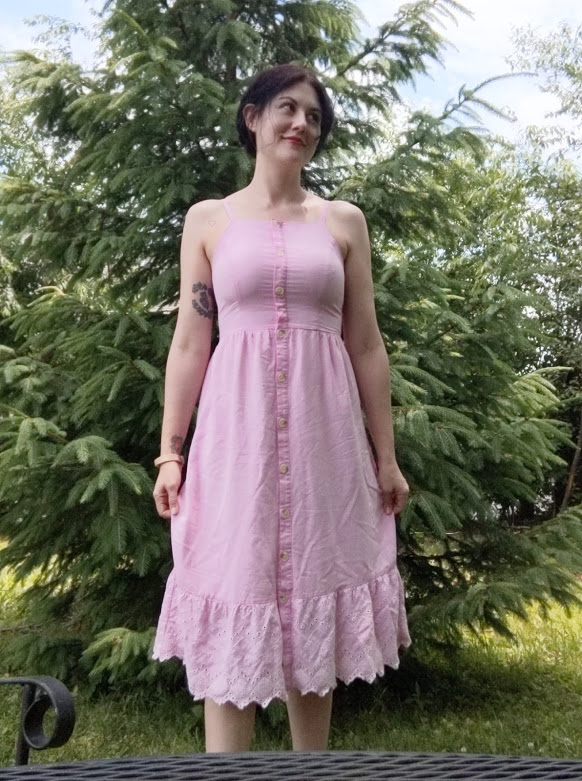
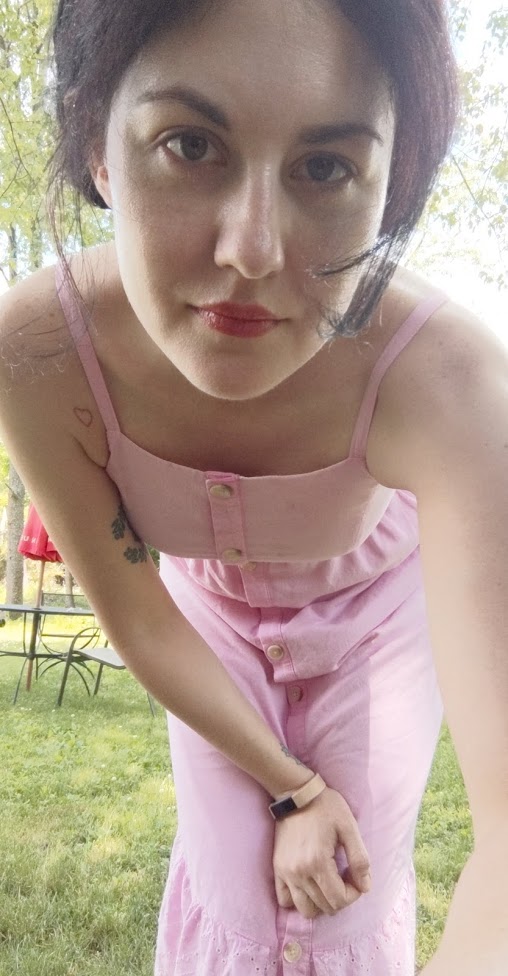
Didn’t move away fast enough
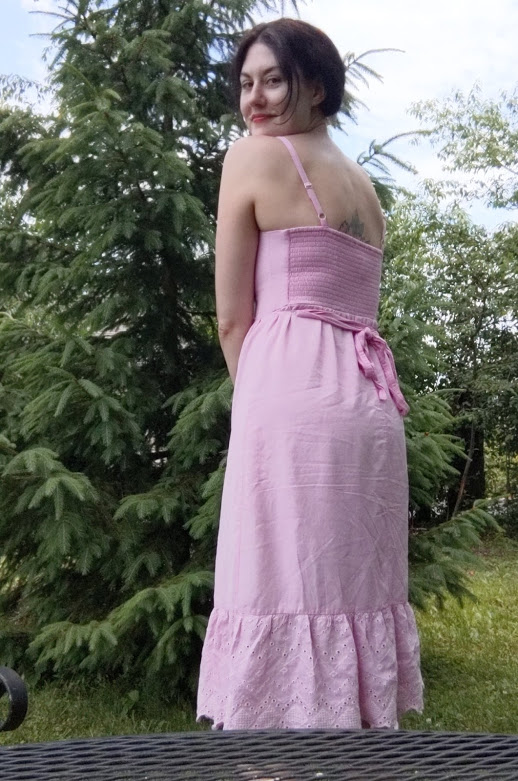
Here’s the back!

Julian approves
Dyeing your clothes always has a surprise ending, but that’s the fun of it! You can always dye and re-dye your things again, too, as long as they’re natural fibers. Nothing is set in stone; maybe someday I’ll ombré it, like my bedroom walls, but for now this dress will stay a lovely pastel bubblegum 😊
So what do you think? Have you ever dyed anything with surprising results?
Until next time!
#madeleinewelch #madeleinealexis #recycle #upcycle #refashion #remix #lowercarbonfoorprint #sustainablefashion #fastfashion #ecofashion
 Moonflower DIY